


Before & After Gallery
Joyce's Chesnut Journey
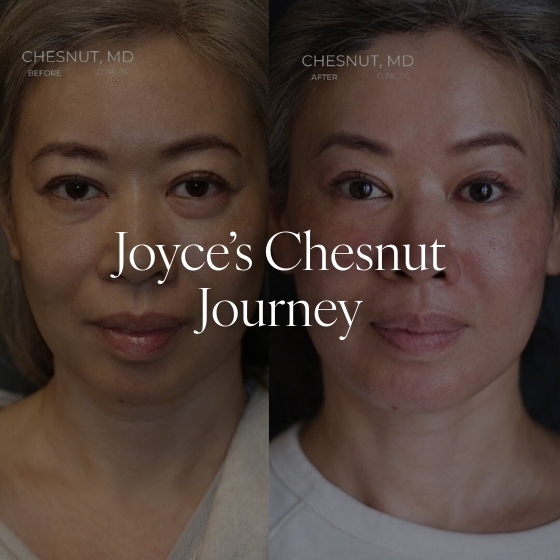
Meet Joyce, Age 45
Not every patient arrives at a consultation wanting to be changed. Some arrive wanting to be preserved.
Joyce was one of those patients. At 45, she traveled from California with a clarity of purpose that is rarer than it sounds: she liked how she looked. She simply wanted to make sure she kept looking that way.
Her desires were, by her own description, subtle. She had no interest in looking 25. She wanted to act early, thoughtfully, and strategically, to look genuinely good into her 50s rather than spend those years trying to recover lost ground. That kind of forward-thinking approach is exactly what early intervention is designed to serve, and Joyce articulated it as well as any patient could.
What she brought to the consultation, beyond clear expectations, was a face that had already been well cared for. She was naturally beautiful, largely happy with her appearance, and specifically attuned to the early changes she wanted to address before they became harder to correct. Working within those parameters (making someone who already looks excellent look a little bit better, without pushing too far or doing too much) is one of the most demanding exercises in surgical restraint.
Joyce’s consultation was shaped by a philosophy that runs through every decision in her plan: the Pareto principle applied to facial rejuvenation. The idea is straightforward in concept and demanding in execution: identify the twenty percent of interventions that will deliver eighty percent of the meaningful improvement, and resist the temptation to do more. For a patient like Joyce, where the baseline is strong and the changes are early, this discipline is not optional. It is the entire point.
Her concerns were specific and well-considered. She had noticed the early signs of change in her brow position, her lower eyelids, and her midface and jawline, the kind of gradual shifts that are easy to dismiss individually but collectively begin to alter the overall impression a face makes. She also had a prior upper eyelid surgery, which meant the work around her eyes would require careful calibration rather than a straightforward approach.
The goal was to optimize the shape, size, and symmetry of her eye openings by focusing on the brow position and the eyelid aperture, working thoughtfully around what had been done before.
Her chin had been on her radar for some time as well. She had initially addressed it with filler, and her injector had eventually suggested a more formal chin implant. During the consultation, a different approach emerged: one that would achieve the same structural outcome without introducing any foreign material at all.
One of the more distinctive elements of Joyce’s plan was the approach to her chin. Rather than placing a traditional silicone implant, the surgical plan called for a technique that uses the patient’s own autologous soft tissue, which is accessed during other parts of the procedure, to replicate the structural function of an implant.
The results are natural, durable, and involve nothing foreign being introduced to the body. For Joyce, who was already inclined toward the most minimally invasive path available, this was a meaningful distinction.
Her lower eyelids would be corrected entirely without external incisions. This is the scarless approach that repositions fat pads from inside the eyelid, leaving no visible access points on the surface of the skin. This is consistently one of the most remarkable procedures in the scarless repertoire, producing meaningful contour improvement with zero evidence of how it was achieved.
Every lifting element of her plan, brow, midface, jawline, and the deep contours of her neck, would be accomplished through the invisible access EnigmaLift® technique. This included a meaningful improvement to her neck by addressing the deep structures, including her submandibular glands, without any pre-auricular incisions in front of the ears. No visible scarring. No evidence of surgery on the skin’s surface. Just the result, standing on its own.
- Enligmalift® Invisible access brow lifting
- Upper eyelid optimization (working around prior surgery)
- Scarless lower eyelid rejuvenation
- Invisible access midface and jawline lifting
- Deep neck contouring including submandibular gland treatment - no pre-auricular incisions
- Autologous soft tissue bio chin augmentation (no implant)
Procedural Plan
Joyce’s surgery was designed as a comprehensive but carefully measured response to early aging, addressing all of the areas that had changed together, in a coordinated way, without overcorrecting any single one of them. The discipline of restraint was built into every decision.
The invisible accessEnigmaLift® provided the structural foundation, lifting the brow, mid face, and jawline through approaches that leave no visible trace on the skin. The neck work extended this principle further, correcting the deep structures including the submandibular glands that contribute to the loss of definition beneath the chin without the pre-auricular incisions that traditional facelift techniques require. This is not a minor distinction. The absence of visible scarring around the ears is one of the defining characteristics of invisible access surgery, and in Joyce’s case it meant that every element of a comprehensive facial rejuvenation was achieved without a single incision that could be seen.
The eye area required particular care. With a prior upper eyelid surgery already in place, the focus shifted to the variables that could be optimized around it: brow position and the actual aperture of the eye openings. Subtle brow elevation changed the frame. Scarless lower eyelid correction addressed the contour beneath, repositioning fat from the inside without any external access. Together, these adjustments refreshed her eyes without altering what made them distinctly hers.
The bio chin augmentation completed the structural picture. By using her own soft tissue rather than a silicone implant, the chin projection achieved is integrated with the surrounding anatomy in a way that foreign materials simply cannot replicate. It moves with her face, responds to the same biological processes, and requires no ongoing management of an implanted device.
Joyce’s recovery unfolded at a distance. She lives out of town, and her progress photos were sent from home rather than captured in clinic. That context is worth holding onto when looking at the early milestone images: phone cameras at home do not replicate clinical photography conditions, and the focal length and lighting differences can make swelling appear more or less prominent than it actually is. What those photos do capture, however, is the honest arc of recovery in real life rather than in ideal conditions.
At one month, the result was already striking in its most fundamental quality: there was not a single visible access point anywhere on her face. No incisions, no scars, no evidence of how the work had been accomplished. Mild to moderate swelling and bruising remained, as expected at this stage, and the full result was still well ahead. But the lift was visible throughout her face and neck, and the trajectory was clearly positive. Both patient and surgeon were already pleased with what was emerging.
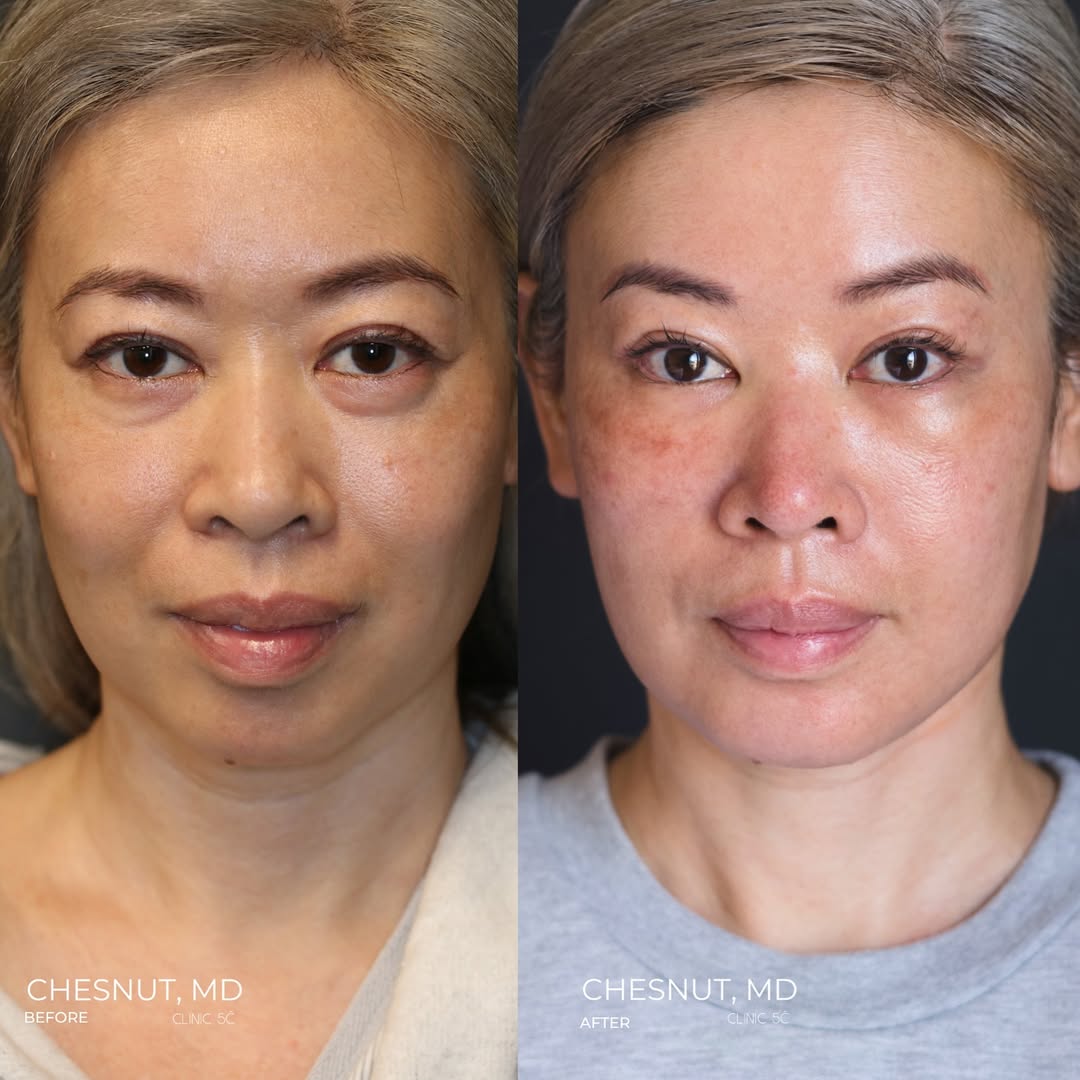
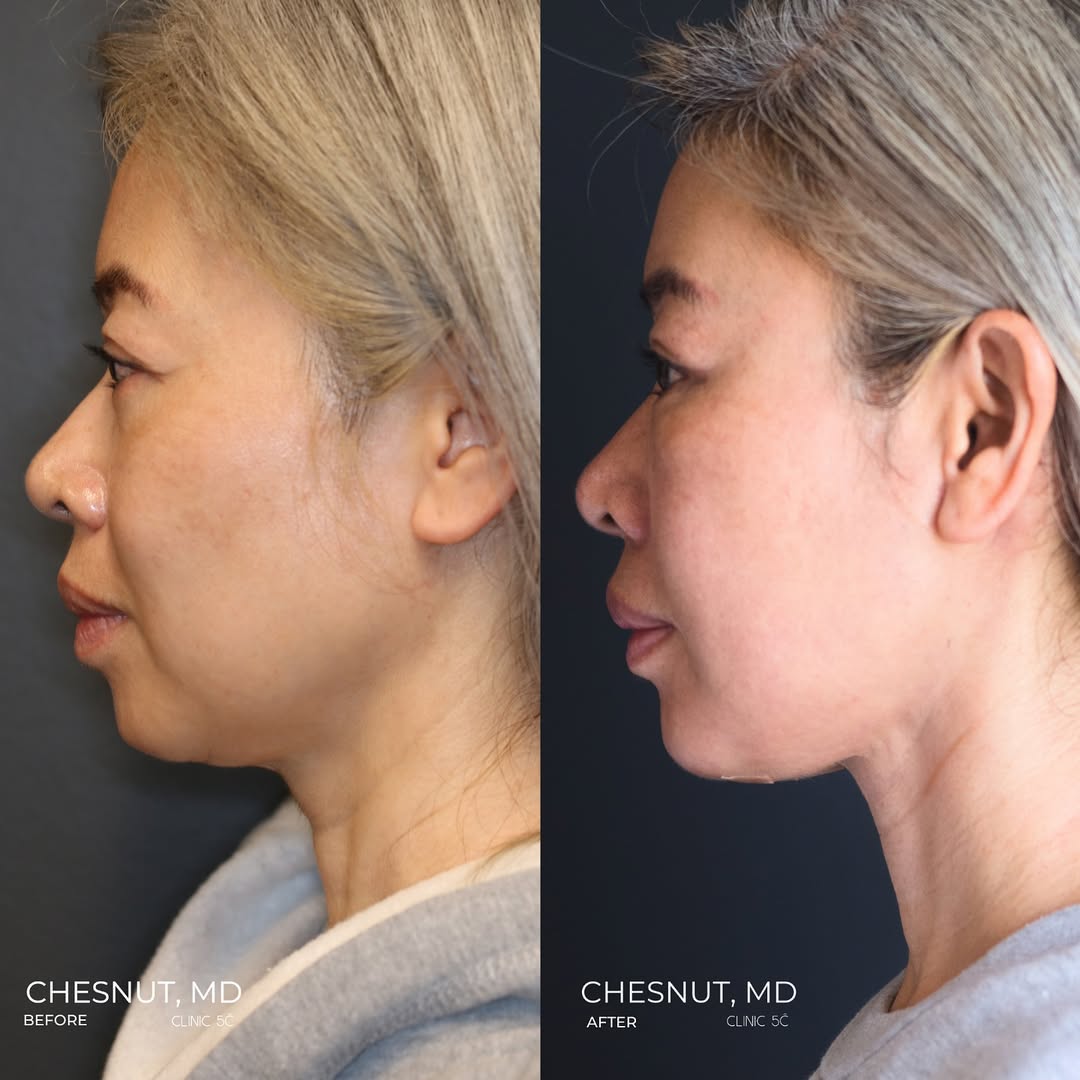
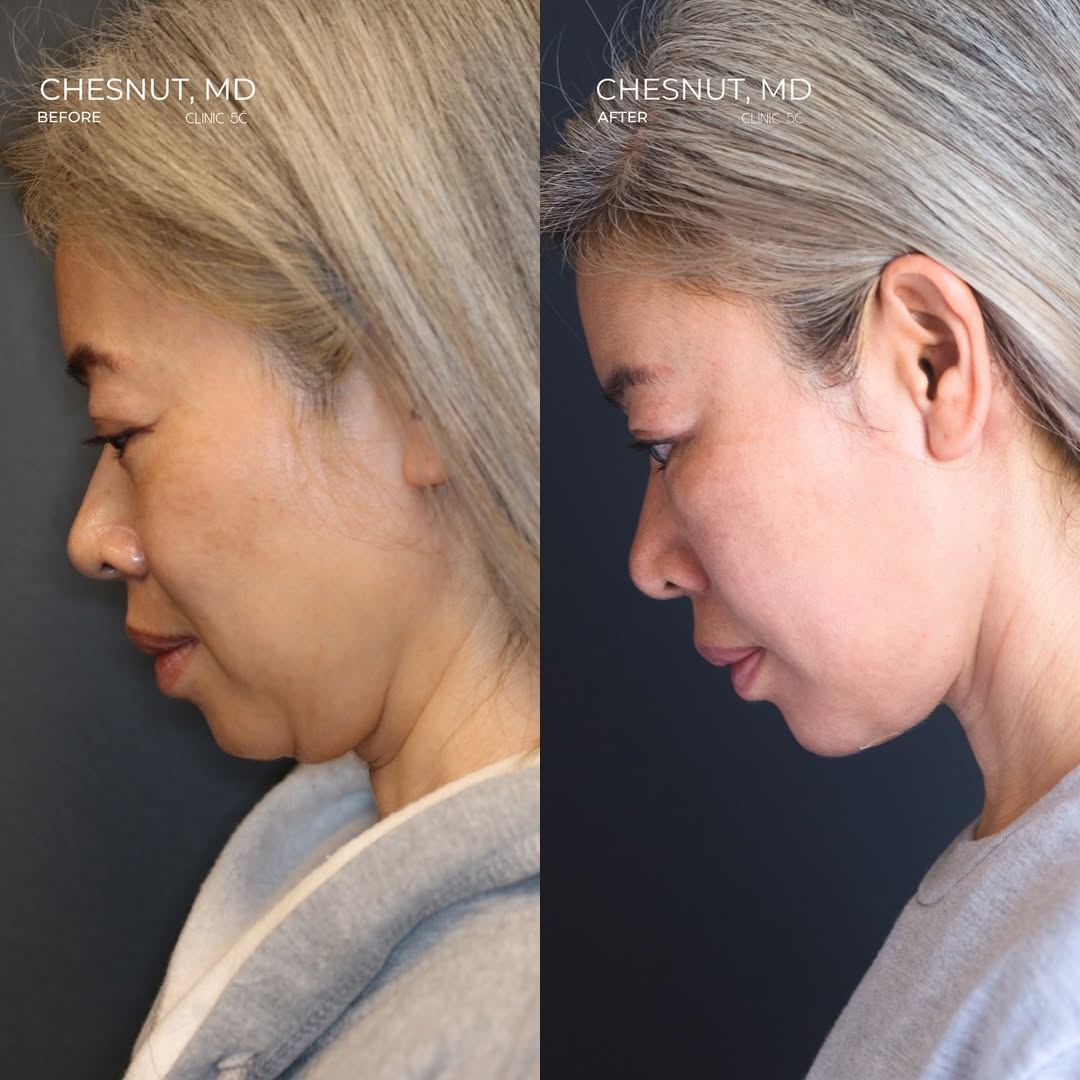
By three months, the healing had progressed substantially. The swelling that characterizes the earlier recovery phase had continued to resolve, and the structural work was settling into its final position. The brow lift, the eye correction, the midface and jawline elevation, the neck contouring, each element was becoming increasingly visible as the tissue calmed and refined. She still had healing ahead at this milestone, but she was precisely on track, and the result being revealed was the subtle, comprehensive improvement that the surgical plan had been designed to produce.
The absence of visible scarring remained consistent across both milestones. No pre-auricular incisions. No evidence of access anywhere. Just a face that looked refreshed, rested, and naturally well — exactly what Joyce had come in hoping to find.
Joyce’s story is a study in what early intervention done well actually looks like. It does not look dramatic. It does not announce itself. It looks like a person who has always taken good care of herself and who continues to do so, which is precisely the point.
The most sophisticated outcomes in facial rejuvenation are often the ones that are hardest to explain, because the explanation would require pointing to things that are no longer there: the subtle heaviness in the brow, the early softening of the jawline, the tiredness that the lower lids were beginning to suggest. Removing those things without replacing them with something that reads as “done” is the work. Joyce, at three months and still healing, is already a clear example of what that work looks like when it goes right.
She wanted to preserve what she had. To look good into her 50s, on her own terms, without a dramatic departure from the face she had always known. At three months, with the result still refining, that outcome is already visible. The best of it is still ahead.


.avif)
Ready To Start Your Journey?
Fax: (844) 961-3417