


Before & After Gallery
Megan's Chesnut Journey
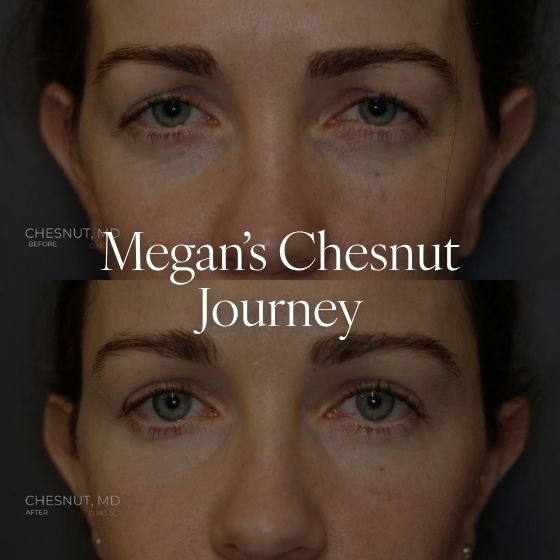
Meet Megan, Age 38
Megan had already been through something most people never face: three major surgeries to reposition the bones of her jaw. Her double jaw surgery, a maxillofacial procedure that moved both her maxilla and mandible into corrected positions, had been life-changing in the way that only functional reconstruction can be. It addressed something foundational, the skeletal framework her entire face was built on, and it did exactly what it was supposed to do.
But once the bones were in their new positions, something unexpected began to unfold in the soft tissue above them. The fat pads, muscles, and skin that had spent decades organized around one bony architecture were now sitting on a different one. They did not simply follow the skeleton into its corrected position. They responded to the change in their own way, and what they produced was a new set of concerns that the orthognathic surgery had not addressed and was never designed to address.
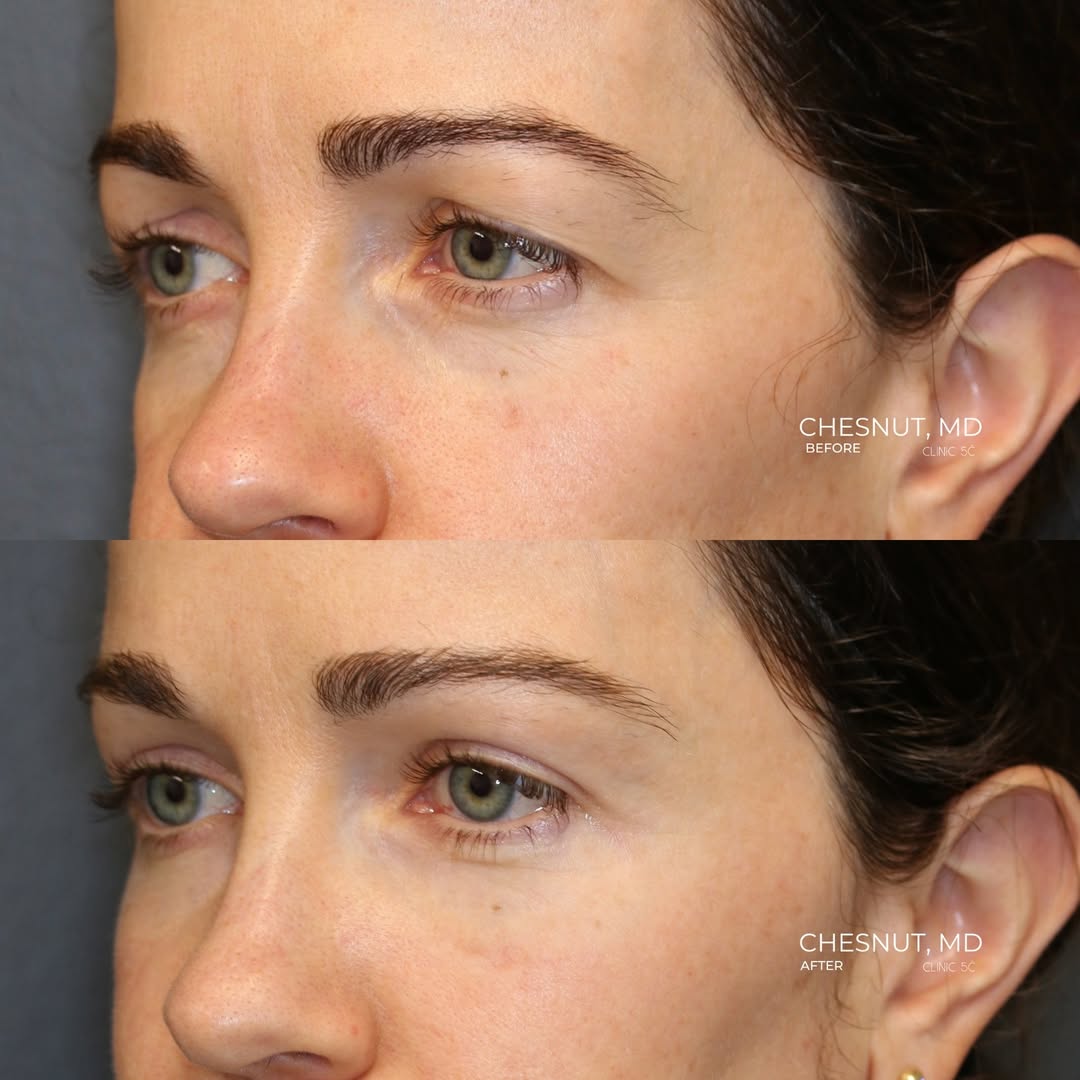
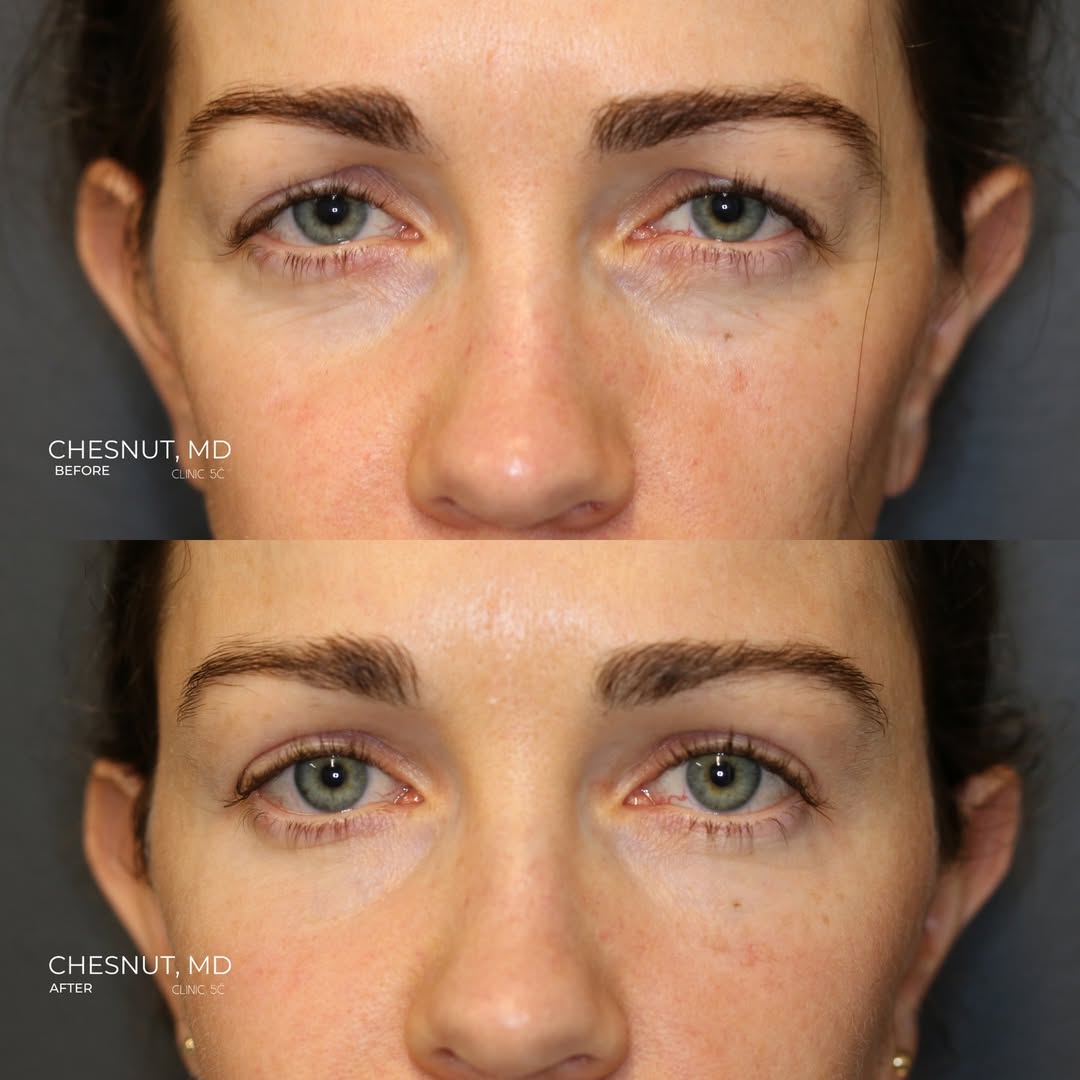
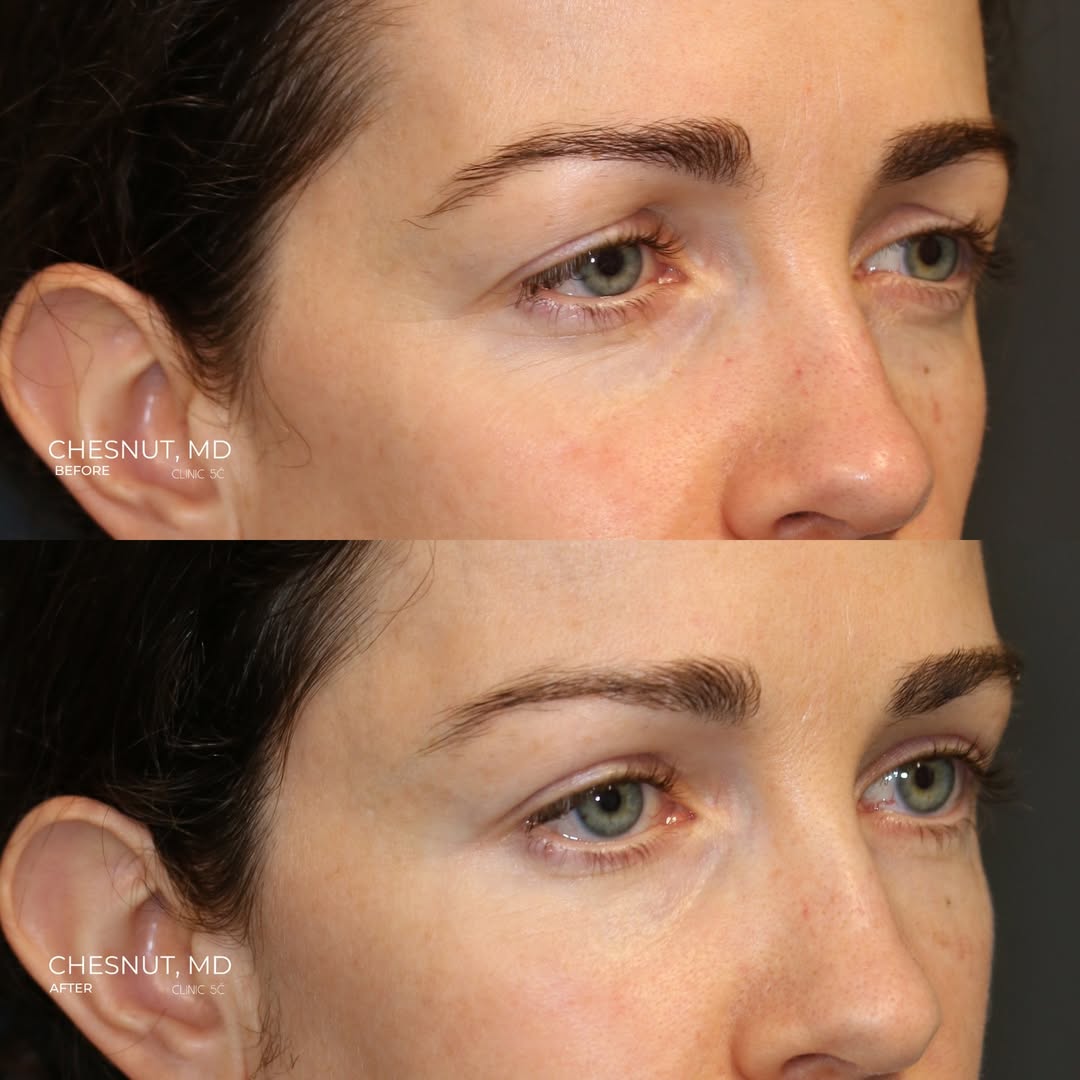
Megan noticed hollowing beneath her eyes, dark troughs, puffiness in her lower lids, and an unnatural fullness in her midface that had not been there before. She knew, with the clarity that comes from having already navigated a complex surgical journey, that she was not quite done. Something still was not quite right. Finding the right person to address what remained required the same research and discernment she had brought to every prior decision about her care.
Megan’s case required a different kind of consultation, one that began not with her current concerns in isolation but with a thorough understanding of the surgical history that had produced them. Three orthognathic procedures had repositioned the bones of her face in ways that were functionally transformative. They had also altered the architectural foundation beneath her soft tissue in ways that set off a cascade of changes above it.
The forward movement of her facial skeleton during the jaw repositioning had shifted the relationship between her bony orbital rim and the fat pads that live in and around her lower eyelids. Volume that had once been distributed in a natural and supported way across the midface was now sitting differently, responding to a foundation that had moved without it. The dark troughs beneath her eyes, the lower lid puffiness, the hollowing in her upper lids, and the unnatural midface fullness were not simply aging changes. They were the soft tissue’s response to a skeletal environment that had been deliberately and beneficially altered.
Understanding this distinction was essential to building the right plan. A conventional approach to her lower lid puffiness or her under-eye hollowing would have addressed the surface expression of the problem without accounting for the underlying cause. The plan had to be built around the specific anatomy that three prior surgeries had produced, which meant it had to be built from scratch.
What Surgery Revealed: The Intraoperative Picture
The pre-operative assessment identified the visible changes and formed a hypothesis about their causes. Surgery confirmed that hypothesis and added a layer of complexity that only the operating room could have revealed.
Inside the deep fat compartments, where the hardware placements and removals from her prior procedures had passed through, significant scar tissue had formed. Scar tissue in these compartments does not simply occupy space. It tethers, restricts, and distorts the fat pads and tissue planes around it, preventing the natural movement and positioning that healthy soft tissue maintains. It was part of why her fat pads had not simply adapted to the new skeletal position over time.They had been held, in part, by the adhesions her prior surgeries had left behind.
Lower eyelid fat pad herniation was also present, a consequence of both the volume shifts produced by the skeletal changes and the altered support structures beneath the eye. And the overall volume distribution of her midface reflected the forward movement of her facial skeleton in ways that required repositioning rather than simply adding or removing tissue.
What the intraoperative findings made clear was that Megan’s case was not just complex in its history. It was complex in its present anatomy, in ways that required real-time surgical judgment rather than the straightforward execution of a predetermined plan.Every face is different. Megan’s face, after three orthognathic procedures, was categorically unlike any other.
The philosophy guiding Megan’s plan was expressed simply in the pre-operative conversations: no overfilling, no masking. Just elevation, repositioning, symmetry, and a natural reset. The goal was to restore harmony between her bone, muscle, fat, and skin, bringing the soft tissue into alignment with the bony foundation that her prior surgeries had correctly established.
Fat pad repositioning addressed the lower eyelid herniation and the volume shifts throughout her midface, moving tissue back into positions that made anatomical sense given her current skeletal structure rather than the one she had started with. Stem cell rich fat transfer provided structural re-volumizing where the tissue needed support that repositioning alone could not supply, restoring three-dimensional contour to areas that had been depleted by both the aging process and the changes her prior surgeries had set in motion.
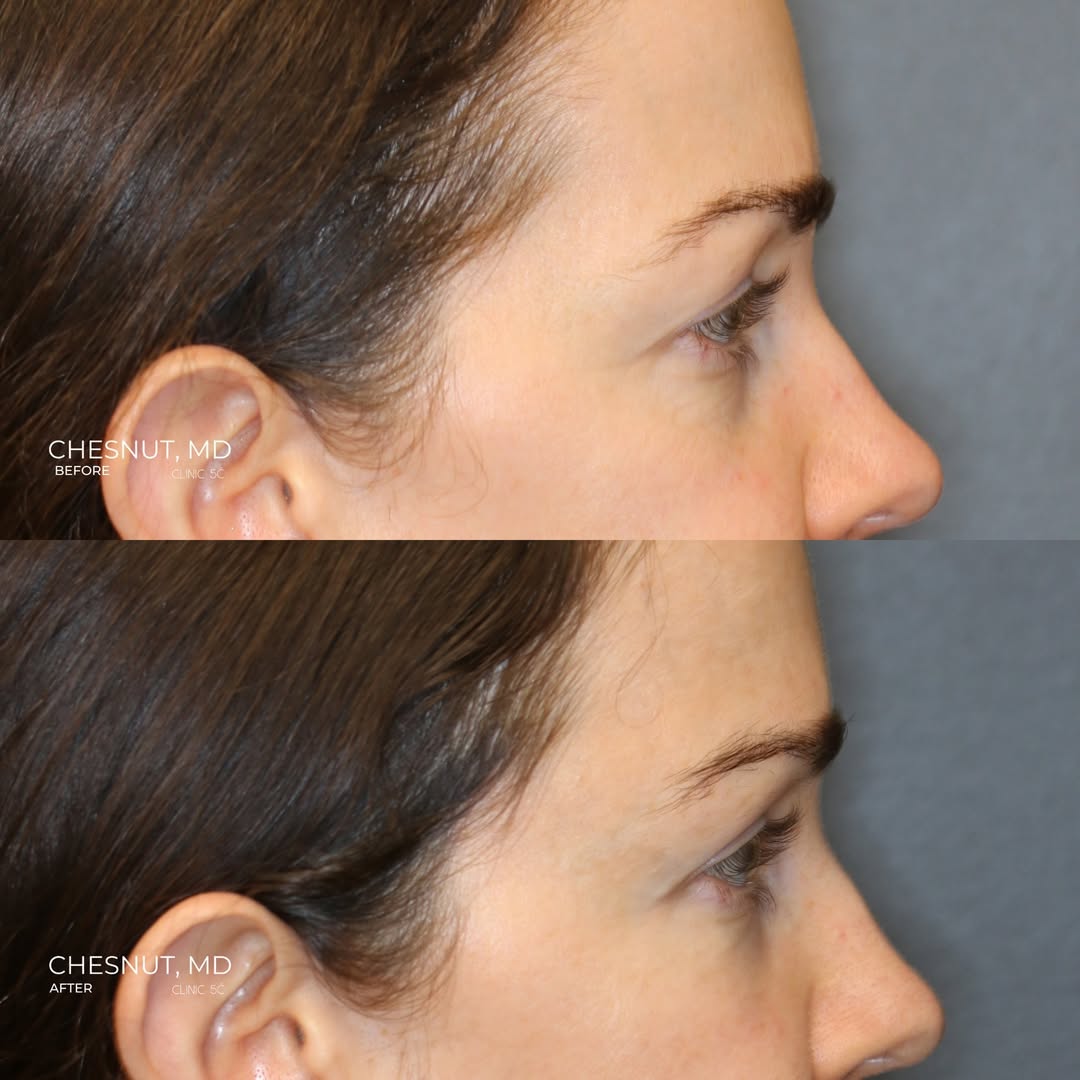
The upper eyelid A-frame deformity, the characteristic hollowing that had developed in her upper lids asa consequence of the bony changes in her orbit, required something more specific. To address the bone loss in her orbital area and correct the A-frame deformity, a technique was applied that uses the patient’s own temporal fascia as a structural material to help rebuild the orbital support that had been compromised. This is a technique developed and refined specifically for situations where conventional approaches cannot reach the level of the problem, and it produced a result in Megan’s case that would not have been possible through any other means.
The scar tissue in her deep fat compartments was addressed as part of the procedure, releasing the adhesions that had been preventing normal tissue mobility and allowing the fat pads to be repositioned into their corrected locations. Without this step, the repositioning itself would have been working against the restrictions that prior surgery had left behind.
Every element of the plan was customized to her specific anatomy, her specific surgical history, and the specific intraoperative findings that her prior procedures had produced. There was no template to follow. There was only her face, understood as completely as it could be before surgery and adapted to in real time during it.
- Fat pad repositioning throughout the lower eyelid and midface
- Scarless lower eyelid rejuvenation with fat pad herniation correction
- Scar tissue release in deep fat compartments from prior hardware placement and removal
- Stem Cell Rich Fat Transfer for structural re-volumizing
- Temporal fascia technique for orbital bone loss correction and upper lid A-frame deformity repair
Megan’s recovery, from the first week onward, unfolded with the attentiveness and honesty that someone who had already navigated three major surgeries brings to the process. She understood recovery. She knew what it asked of a person, and she engaged with the optimized recovery protocol with the same seriousness she had brought to every prior phase of her care.
At one week, she was doing well, the early swelling present and appropriate, the deeper healing already underway. At one month, the trajectory was clearly positive. The changes that had defined her post-orthognathic appearance, the under-eye hollowing, the lower lid puffiness, the midface irregularity, were already beginning to resolve as the repositioned tissue settled into its new locations and the stem cell rich fat transfer began its integration.
By three months, Megan was communicating openly about her experience, sharing her perspective on both the clinical process and the recovery at home. Her account reflected a patient who had found what she had been looking for: not just a surgeon capable of addressing her concerns, but a plan that finally made sense of the changes she had been living with since her jaw surgeries and a result that was beginning to close the gap between how she felt and how she appeared.
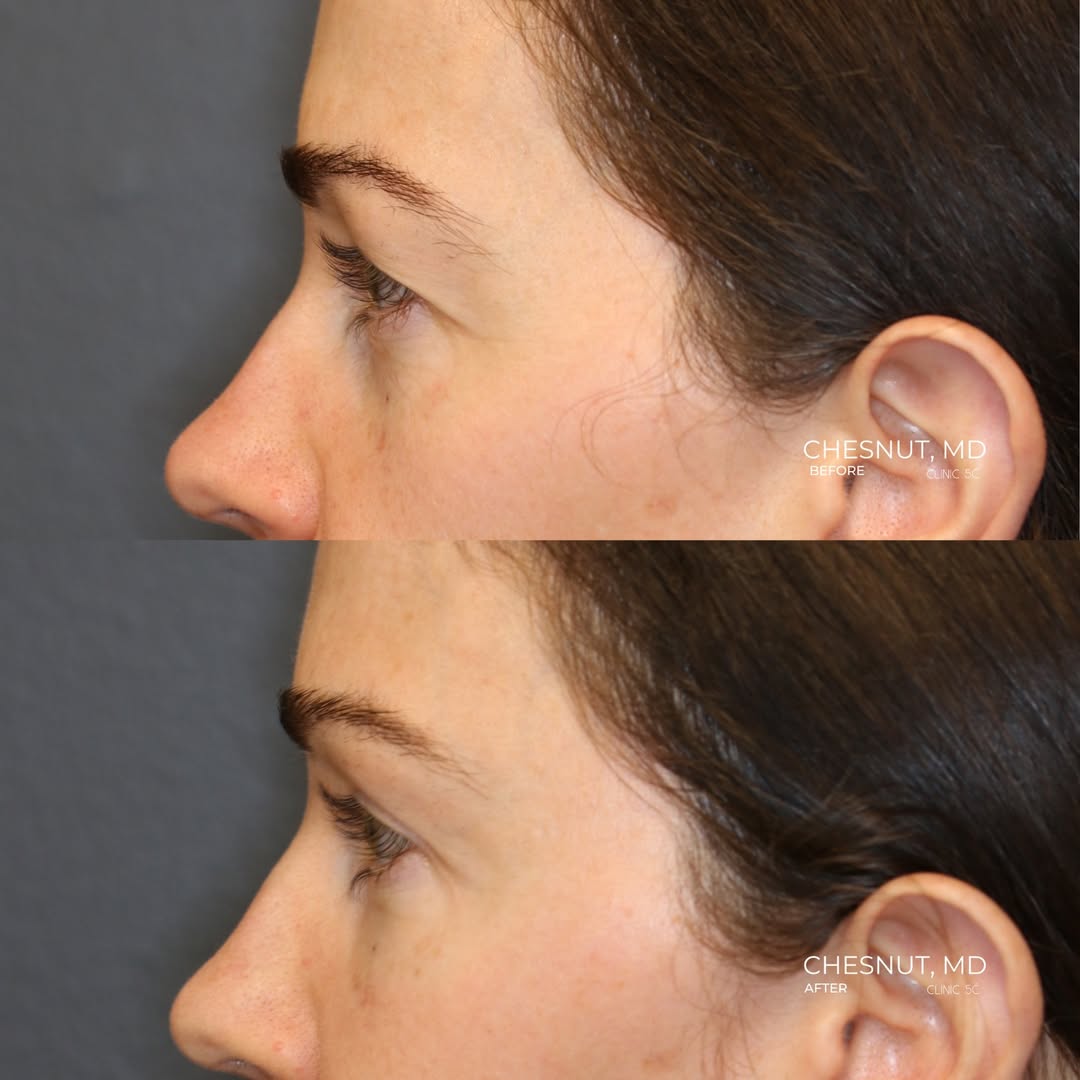
At four and five months, the three-dimensional contour changes around her eyes were becoming fully visible. The upper lid A-frame hollowing that had been one of the most defining visual consequences of her skeletal changes was correcting, the temporal fascia work and the fat transfer together rebuilding the orbital support that had been lost. Even in lateral profile views, the long-term volume and contour correction was apparent in ways that confirmed the depth and durability of the structural work that had been done.
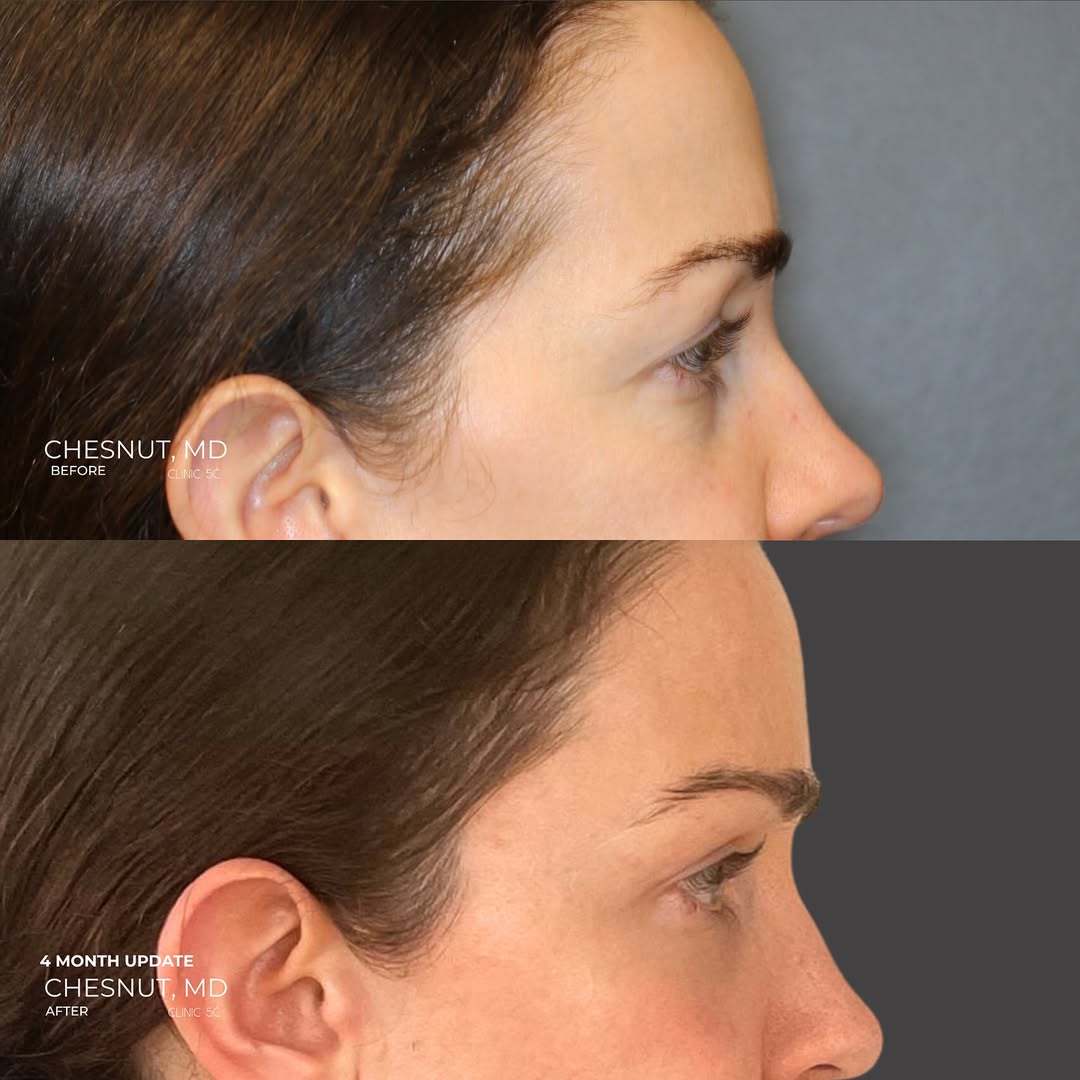
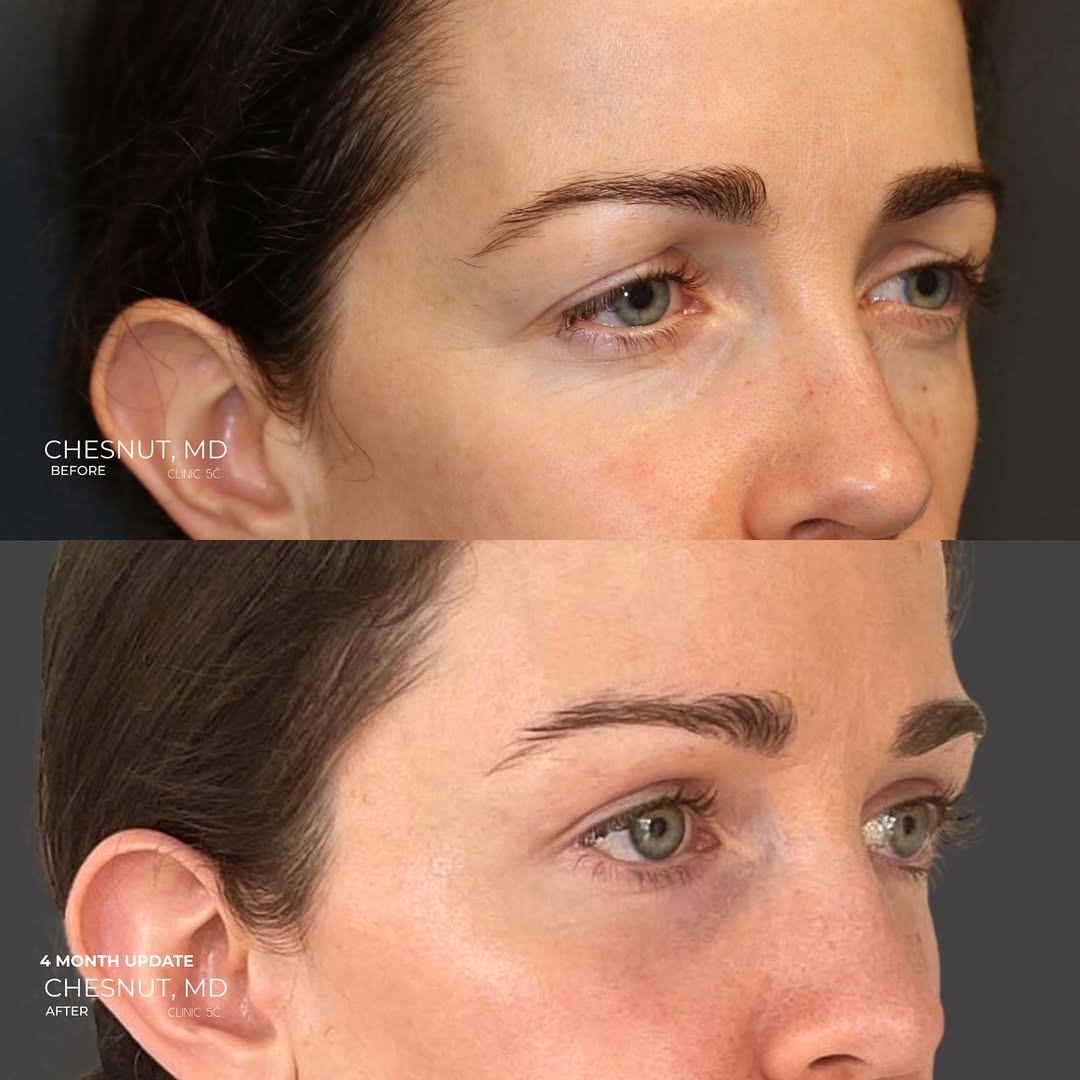
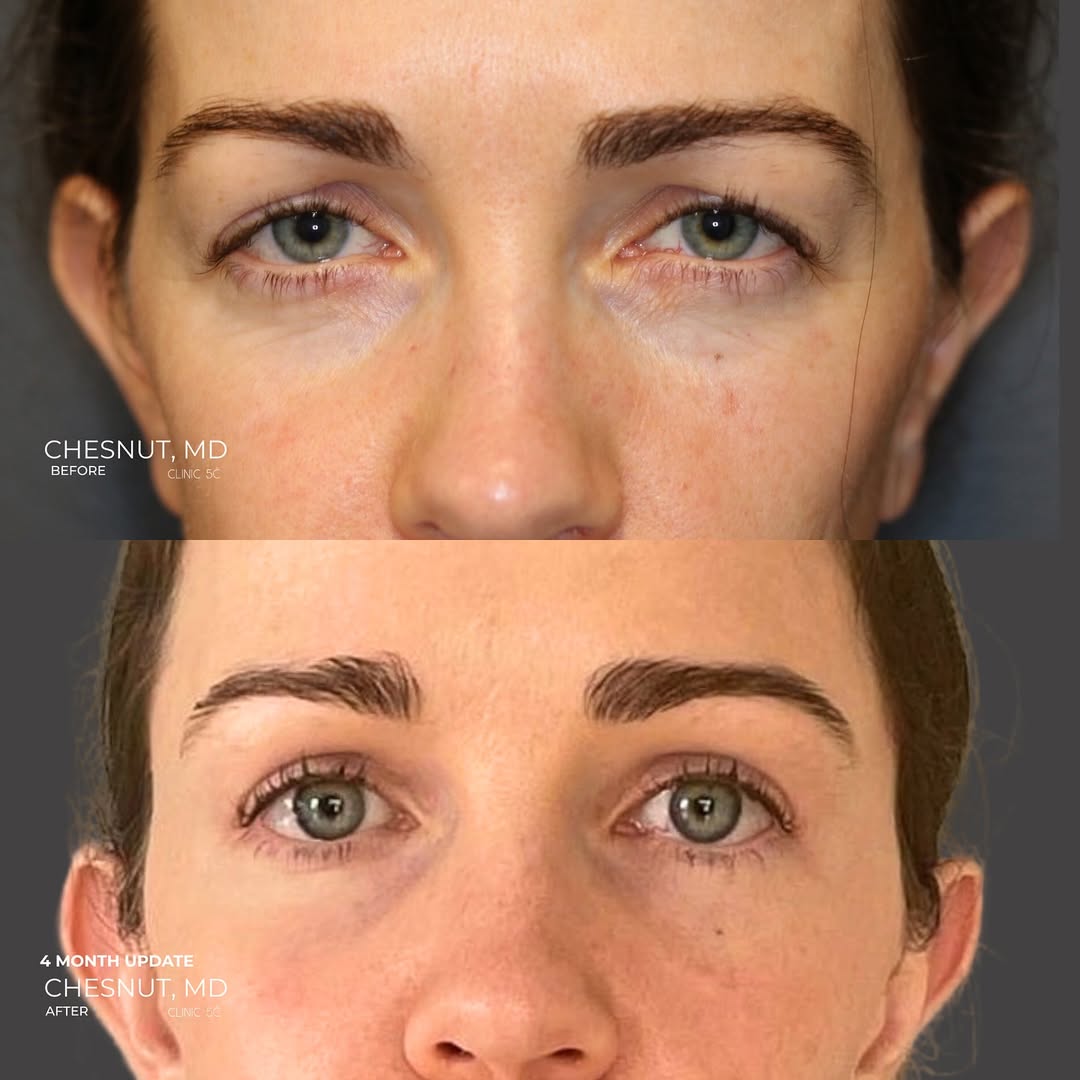
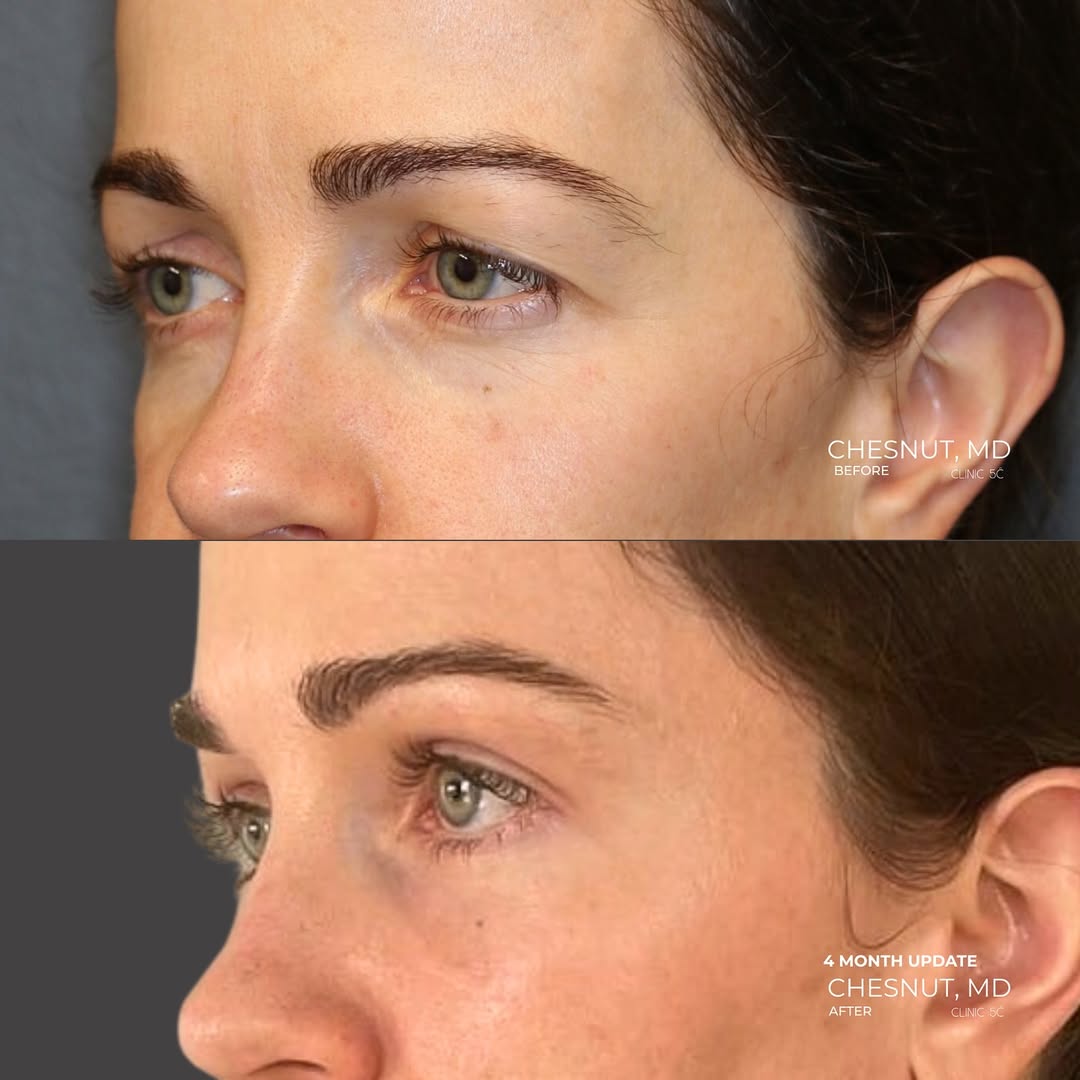
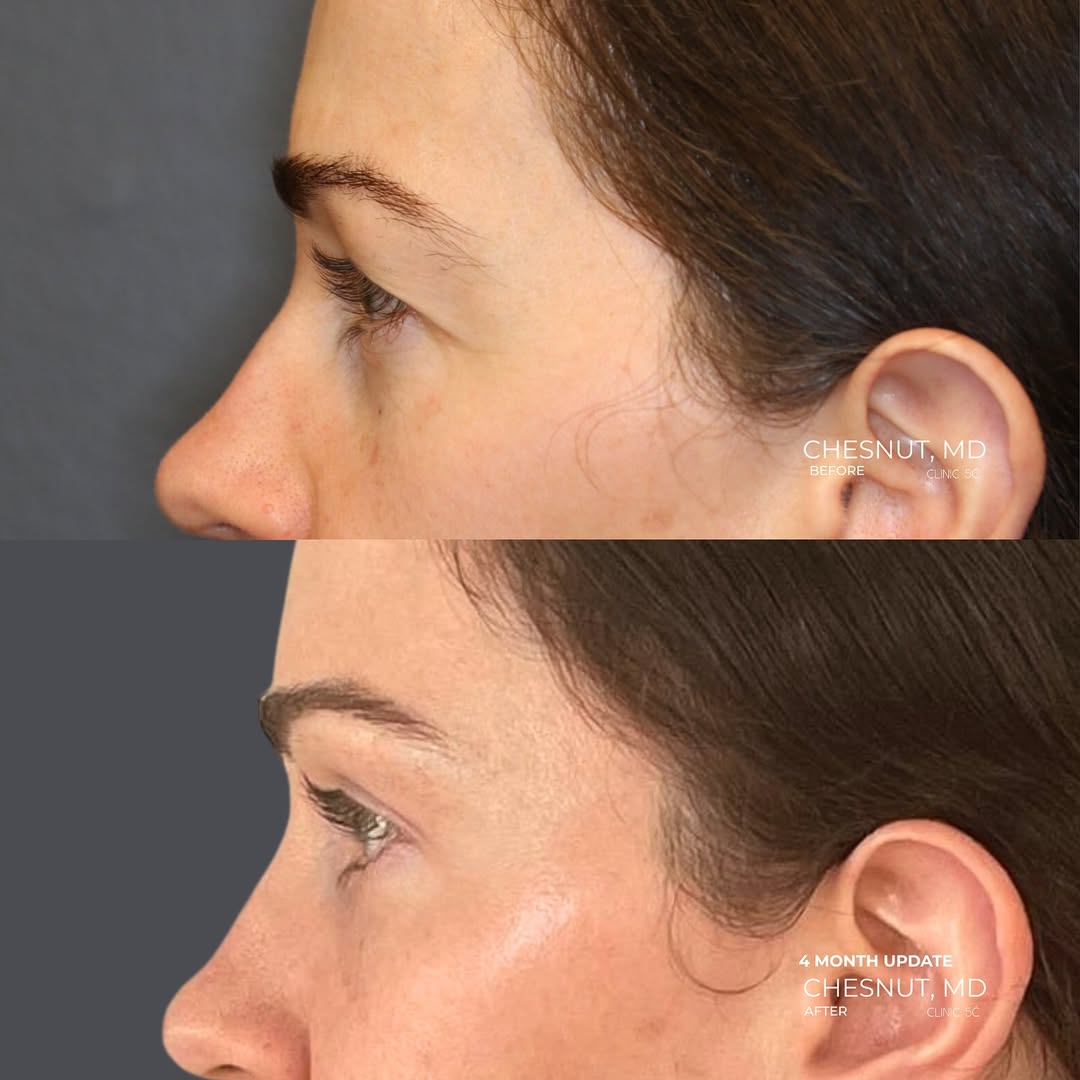
At the later follow-up milestones, the full picture of what her surgery had produced was finally visible. Her neuroanatomy was interpreting her face differently, which is not a metaphor but a literal description of what happens when the structural signals a face sends to the people observing it change. She had a new presence. A new visual coherence. The dark circles, the hollowing, the irregular volume distribution that had followed her jaw surgeries were gone, replaced by a face that held together the way it was always supposed to, on the foundation that her orthognathic surgery had correctly established years before.
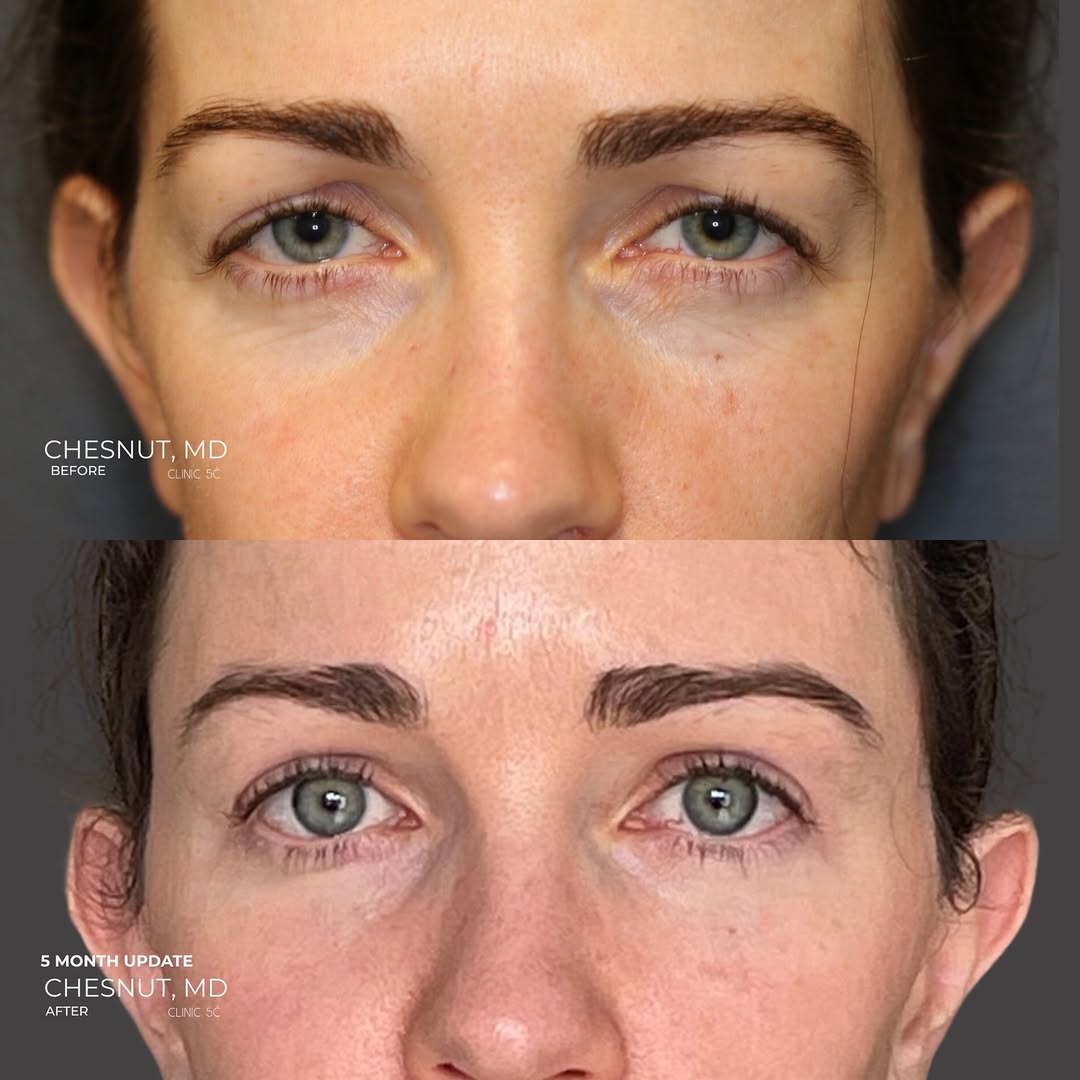
She had known she was not quite done after her jaw surgeries. She had been right. And the work that finished what those surgeries started had produced something that neither she nor her prior surgeons had been positioned to achieve alone.
Megan’s story is about the relationship between structure and surface, and what happens when one is corrected without the other. Her jaw surgeries were necessary, successful, and life-changing. They were also incomplete in the sense that every skeletal correction is incomplete without the soft tissue work that allows the face above it to reflect the new foundation beneath it.
Addressing her soft tissue at 38, rather than waiting for the changes to progress further, was a decision oriented toward the long game. Less surgery now, performed on tissue that had not yet deteriorated significantly, produces better results that last longer and age more gracefully than the same correction performed later on tissue that has had more time to respond to a misaligned structural foundation. The plan was not just restorative. It was protective, setting her on a better aging trajectory for the decades ahead.
What makes Megan’s case instructive beyond her individual outcome is what it illustrates about the relationship between facial surgery at different levels of the anatomy. The bones, the muscles, the fat pads, and the skin are not independent systems. They respond to each other, depend on each other, and change together. When one layer is altered, the layers above it follow. Understanding that relationship, and building a plan that honors it, is what makes the difference between a result that simply corrects a visible concern and one that restores genuine harmony across every layer of the face.
Megan’s face has that harmony now. It took four surgeries across multiple years and more than one surgical specialty to produce it. The result was worth every step.
.avif)
Ready To Start Your Journey?
Fax: (844) 961-3417