


Before & After Gallery
Tricia's Chesnut Journey
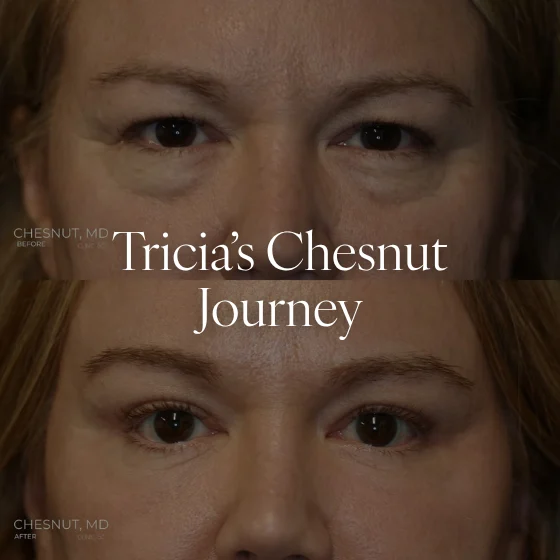
Meet Tricia, Age 50
Tricia arrived as something genuinely rare. Not because her concerns were unusual, lower eyelid bags and hooded upper lids are among the most common reasons patients seek eyelid rejuvenation, but because of what she had never done. In a field where most patients arrive with layers of prior treatment already present in the tissue, Tricia had never had filler in her lower eyelids or cheeks. Not once.
That single fact changed everything about her consultation, her surgical plan, and ultimately her recovery. It also made her case one of the most instructive examples of what true lower eyelid aging actually looks like when the anatomy has not been altered, compressed, or inflamed by years of accumulated gel. In a practice where clean anatomy is increasingly uncommon to encounter, Tricia’s case was an opportunity to study and document what nature, left undisturbed, actually produces over time.
For years, when she looked in the mirror, all she could see were her eye bags and her hooded upper lids. They were the first thing she registered, every time, and they had been throwing off her sense of herself for long enough that she had begun actively looking for a solution. The suggestions she received along the way ranged from filler to surgical fat pad removal, both of which, for reasons that her anatomy made clear, would have made her look less like herself rather than more. Luckily she kept looking until she found the right answer.
Examining Tricia’s lower eyelids offered something that is becoming increasingly difficult to find: a clear, unobstructed view of how the lower lid and cheek actually age when the tissue planes have not been disrupted by filler. What that view revealed was instructive not just for her case but as a reference point for understanding lower eyelid aging more broadly.
Her native fat pads, the structural cushions that live around and below the eye, were visible in their natural position, tethered to the orbital rim with the characteristic trough that forms as the attachment remains fixed while the fat above it shifts forward with age. When she gently squinted, those fat pads pressed back into the orbit, behaving exactly as native anatomy should. That simple movement confirmed something important: what was present was real structural tissue, not filler, not fluid, not an inflammatory gel sitting in the wrong tissue layer. It was her own anatomy, doing what it had always done, just in a position that no longer served her.
This distinction matters enormously for surgical planning. Fat pads that behave like fat pads can be repositioned. They can be moved to a more youthful location, where they restore the smooth contour between the lower lid and the cheek while maintaining the volume and eyeball support that the orbit depends on. Filler that has been layered into those same planes over years cannot be repositioned. It has to be removed first, which adds complexity, extends recovery, and introduces uncertainty about what the underlying anatomy actually looks like beneath it.
Tricia arrived without that complexity. Her lymphatic drainage was uncompromised. Her tissue planes were undisturbed. Her anatomy was exactly what it appeared to be. That clarity would shape not just the surgical approach but the recovery that followed.
The advice she had received before finding this practice deserves a brief examination, because it reflects a pattern that is worth understanding. The suggestion to fill her lower eyelids with filler would have added a water-attracting gel to tissue that was already experiencing the early signs of volume displacement, potentially creating the puffy, slightly bluish appearance that chronic lower lid filler eventually produces in many patients. The suggestion to surgically remove her fat pads would have eliminated the very structural tissue that her lower lids needed, creating hollowing and a loss of eyeball support that is difficult to reverse. Neither approach was oriented toward what her anatomy actually called for. Both were oriented toward what was familiar or convenient rather than what was correct.

The surgical philosophy guiding Tricia’s plan was built on a principle that is straightforward in concept but requires genuine precision in execution: do not remove what belongs there. Move it back to where it belongs.
Her fat pads were not pathological tissue. They were her own structural anatomy, displaced from the position they had occupied earlier in her life. Removing them would have created a problem in the name of solving one, trading the visible puffiness of displaced fat for the hollowing and loss of support that follows its absence. Repositioning them restored the smooth contour between her lower lid and cheek, maintained the volume the orbit depended on, and preserved the structural identity of her lower face in a way that removal never could have.
The rest of her plan followed the same invisible access philosophy that governs all EnigmaLift procedures. Her forehead, temples, upper lids, lower lids, and midface would all be addressed without a single visible incision, scar, or access point anywhere on her face. The comprehensive scope of the upper face rejuvenation, covering every zone from brow to midface, was designed to produce a result that held together as a coherent whole rather than correcting one area while leaving the surrounding zones unchanged.
Her clean anatomy also informed the recovery expectations. Without prior filler to contend with, her lymphatic drainage was unobstructed, her tissue planes were clear, and the inflammatory response to surgery would not be compounded by the water-attracting properties of accumulated hyaluronic acid. A faster, cleaner recovery was not simply hoped for. It was anatomically anticipated.
- Enigmalift invisible access forehead and temple rejuvenation
- Upper eyelid rejuvenation
- Scarless lower eyelid fat pad repositioning with midface contour correction
Procedural Plan: Invisible Access, Every Layer
Tricia’s surgery addressed the entire upper face as a coordinated unit, with each element of the plan working in concert with the others rather than treating each zone as an isolated concern.
The forehead and temple work, performed through invisible access, addressed the descent that had been contributing to the heaviness in her upper face and the hooding of her upper lids. Correcting this at the structural level, rather than simply removing upper lid skin to compensate for brow descent, produced a result that was both more natural and more durable than a surface-only approach would have achieved.
The upper eyelid surgery refined the lid contour and aperture, working in concert with the brow correction to open and brighten her gaze without altering the fundamental character of her eyes. The goal was the appearance of being vibrant and well rested, which is a different target than simply having less skin present in the upper lid. That distinction shapes the technical approach at every step.
The scarless lower eyelid fat repositioning was the centerpiece of her plan and the procedure that most directly addressed the concern that had brought her in. Working entirely through internal access, the fat pads were mobilized from their displaced position and repositioned to smooth the contour between her lower lid and cheek, filling the trough that had formed at the orbital rim and restoring the continuous, youthful transition from lid to midface that had been lost to the gradual forward shift of her native tissue. No fat was removed. No volume was sacrificed. Nothing foreign was introduced. The structural tissue that belonged there was simply returned to where it had always belonged.


Tricia’s recovery unfolded with the efficiency that her clean anatomy had made possible. At two months, she was already out in the world, traveling internationally, moving through her daily life without anyone around her knowing that anything had been done. That is not simply a testament to the surgical technique, though delicate tissue handling and precise execution are genuinely part of the story. It is also a direct consequence of the tissue she brought to the operating room.
Prior filler extends and complicates recovery in ways that are well documented: impaired lymphatic drainage, water retention from the hydrophilic properties of hyaluronic acid, and chronic low-grade inflammation all slow the resolution of post-operative swelling and make the recovery arc longer and less predictable. Tricia had none of that working against her. Her lymphatic drainage was clear. Her tissue planes were undisturbed. Her healing proceeded along the clean, direct path that uncompromised anatomy allows.
By three months, the result was fully present and continuing to refine. Tricia described it simply and precisely: she saw herself again when she looked in the mirror. The eye bags and hooded upper lids that had been the first thing she registered for years were gone. What remained was her face, looking the way she remembered it, rested and vibrant and recognizably hers. The forehead, temples, upper and lower lids, and midface had all been addressed without leaving a single visible mark anywhere on her skin. No incision, no scar, no access point. Nothing to explain or conceal.
Further improvement remained ahead at three months. That is consistent with the healing arc of this kind of work, where the most refined details continue to emerge as the tissue completes its remodeling. What was already present was a result that had fully cleared the threshold of everyday life and would only continue to sharpen from there.
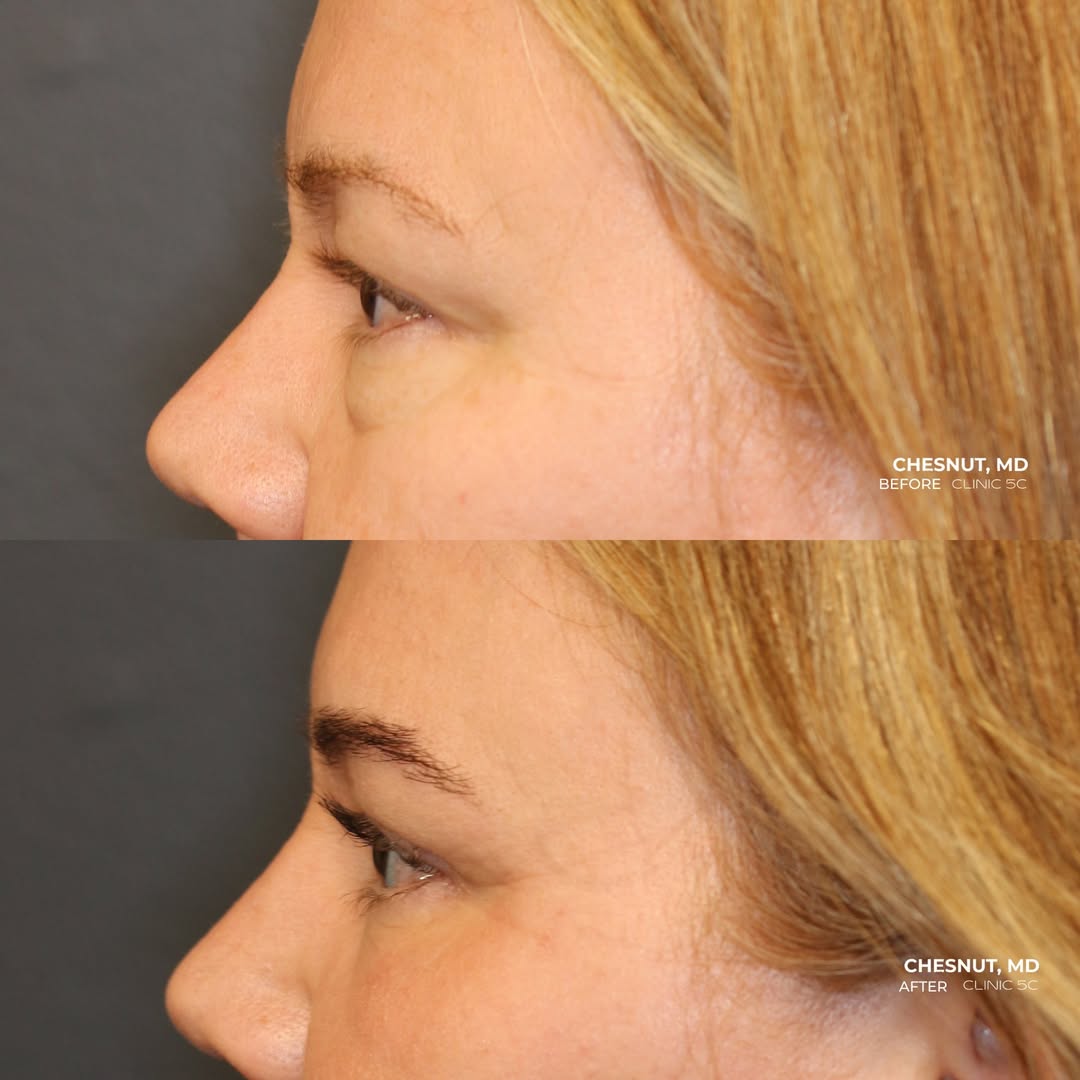

What Clean Anatomy Makes Possible
Tricia’s story carries a lesson that extends beyond her individual outcome. Her case offers a rare and documented view of what lower eyelid aging looks like when it has been allowed to progress naturally, without the complicating presence of filler in the tissue planes. That view clarifies both what the aging process actually produces and what surgical correction, oriented toward repositioning rather than removal, is capable of restoring.
It also illustrates something worth understanding for anyone at the beginning of their own journey with lower eyelid concerns. The decisions made early, whether to fill tissue that is beginning to change or to leave it undisturbed until a definitive correction can be made, have consequences for what the surgical options eventually look like. Tricia’s clean anatomy gave her surgeon the clearest possible view, the most predictable recovery, and the most direct path to the result she was looking for.
At three months, she sees herself in the mirror again. That is the whole goal, stated simply and met completely. The improvement still arriving will only make it better.

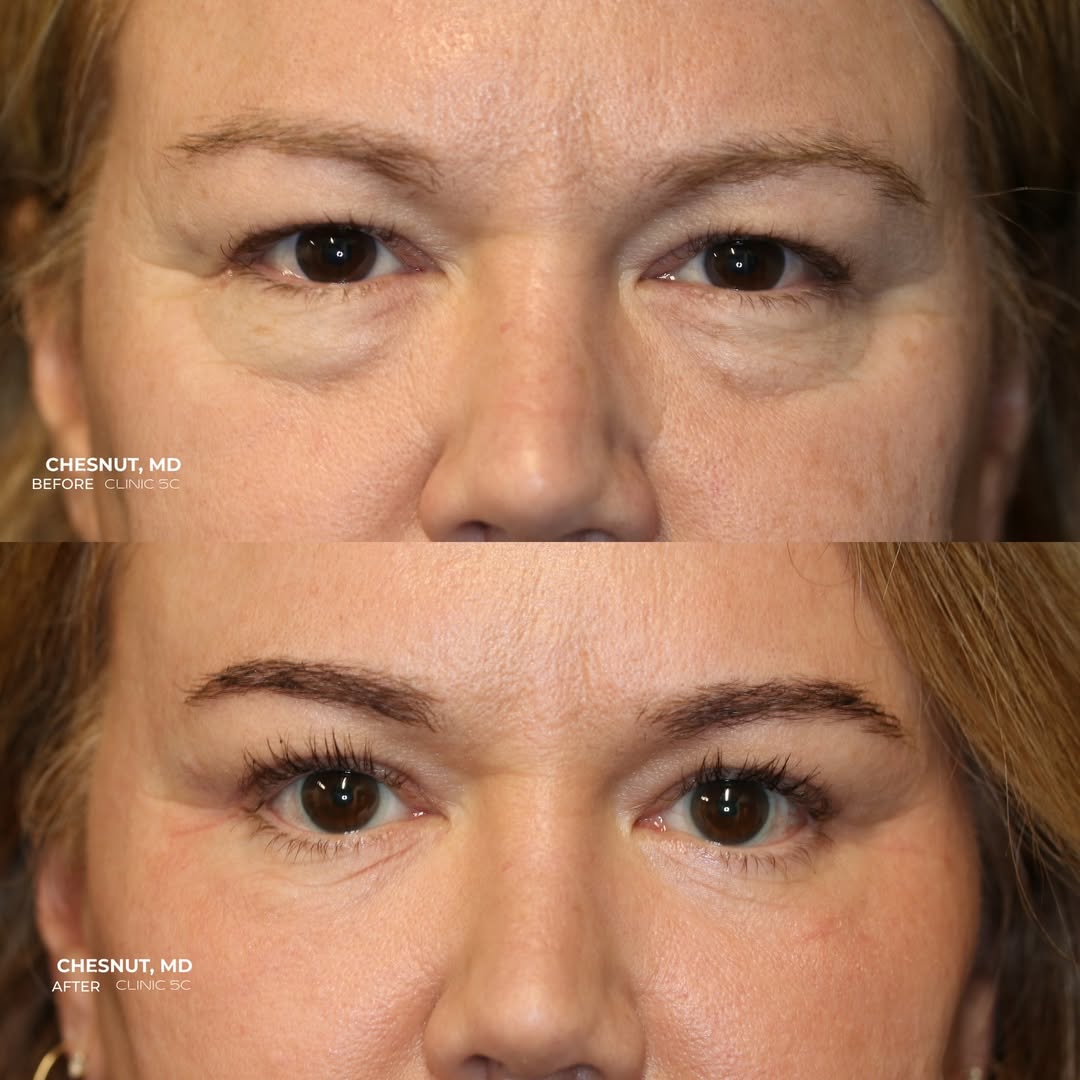
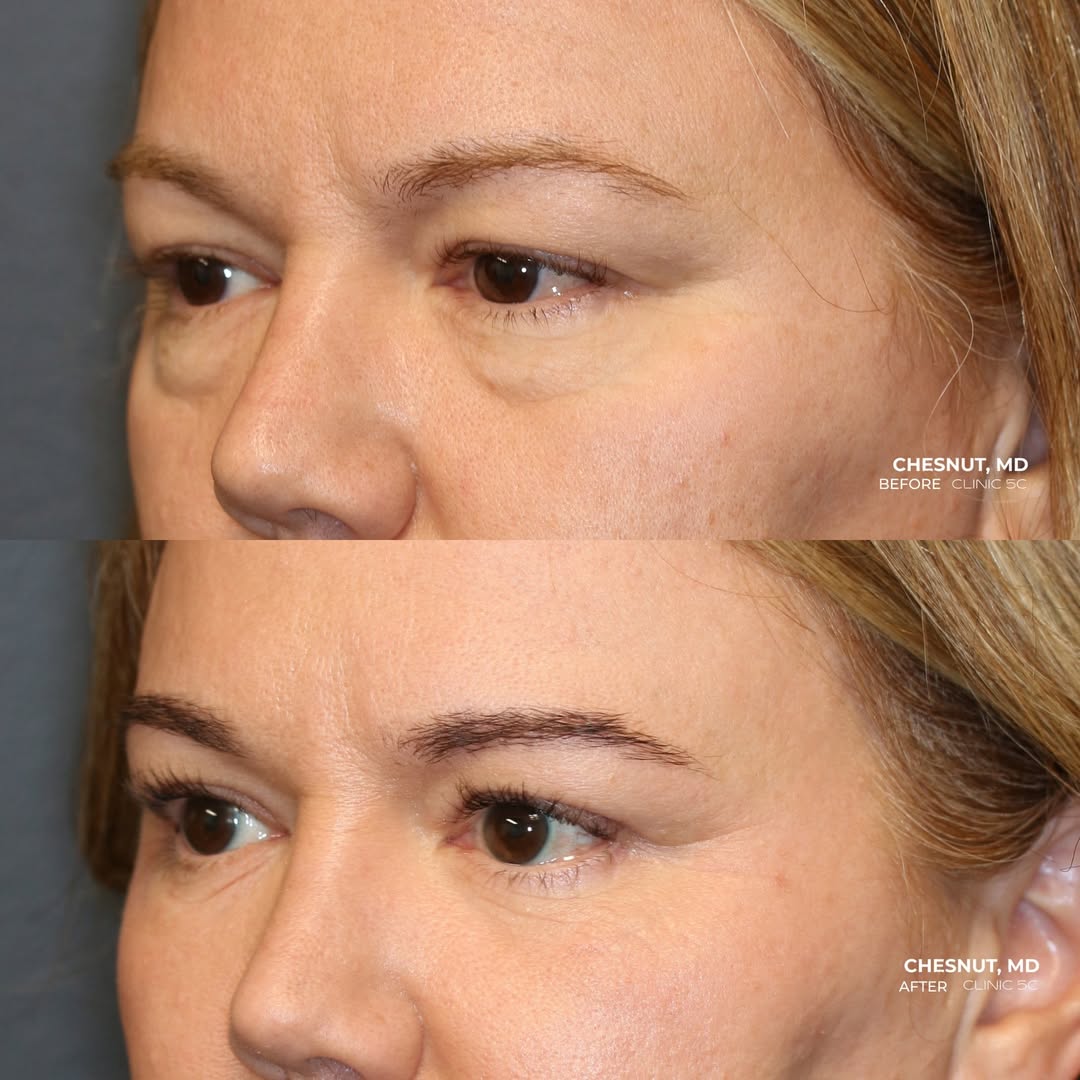
.avif)
Ready To Start Your Journey?
Fax: (844) 961-3417