


Signs You May Be Ready for Facial Plastic Surgery (And Signs You’re Not)
How experienced facial surgeons evaluate timing, expectations, and long-term outcomes
Deciding whether to pursue facial surgery is rarely about age alone. Patients often ask whether they are too young or too old for procedures like a facelift, but the more important question is whether they are ready. Readiness involves physical health, emotional clarity, realistic expectations, and long-term planning.
Experienced facial surgeons evaluate much more than wrinkles or skin laxity. They assess timing, anatomy, mindset, and whether surgery aligns with the patient’s overall trajectory of aging.
Facial Surgery Is About Readiness, Not a Number
There is no universal age that determines when facial surgery is appropriate. Patients in their 30s, 40s, 60s, and even 80s may be candidates depending on their health, anatomy, and goals.
According to facial plastic surgeon Dr. Cameron Chesnut, the question is not “How old are you?” but “What is happening structurally, and why do you want to intervene now?”
Some patients notice early descent of facial fat pads in their 30s or 40s. Others remain comfortable with their appearance until much later in life. The decision is individual and deeply personal.
Signs You May Be Ready for Facial Surgery
1. Your concerns are consistent and long-standing
Patients who are ready for surgery typically have concerns that have developed gradually over time. These are not reactions to a single photograph, comment, or social media trend.
When aesthetic concerns persist over years rather than months, it suggests thoughtful awareness rather than impulsive decision-making.
2. You are seeking refinement, not transformation
Healthy candidates generally want to look like themselves, only more aligned with how they feel internally. These factors determine who is a good candidate for cosmetic surgery at 5C.
Surgery aimed at restoring structure, balance, and harmony tends to produce the most natural results. Patients seeking dramatic change or a new identity are often not ideal candidates.
3. You understand what surgery can and cannot do
Facial surgery can reposition tissue, restore structural support, and remove excess skin when appropriate. However, it cannot stop the aging process, deliver perfection, or resolve unrelated life dissatisfaction.
Patients who demonstrate a clear understanding of limitations tend to have the highest long-term satisfaction with their surgical results.
4. You are medically healthy and prepared for recovery
Age alone does not determine candidacy. Overall health, cardiovascular stability, and surgical fitness matter more.
Dr. Chesnut has performed facelift procedures on patients in their 70s and even 80s who were medically optimized and realistic about outcomes. Conversely, younger patients who are not healthy may not be appropriate candidates.
Recovery planning is equally important. Patients must be willing to allow time for healing and temporary swelling.
5. You are choosing surgery for yourself
Readiness often involves quiet internal clarity. Patients who decide based on their own introspection, rather than external pressure from a partner or cultural trend, tend to approach surgery with grounded expectations.
Clinical Perspective: A Consultation at 42
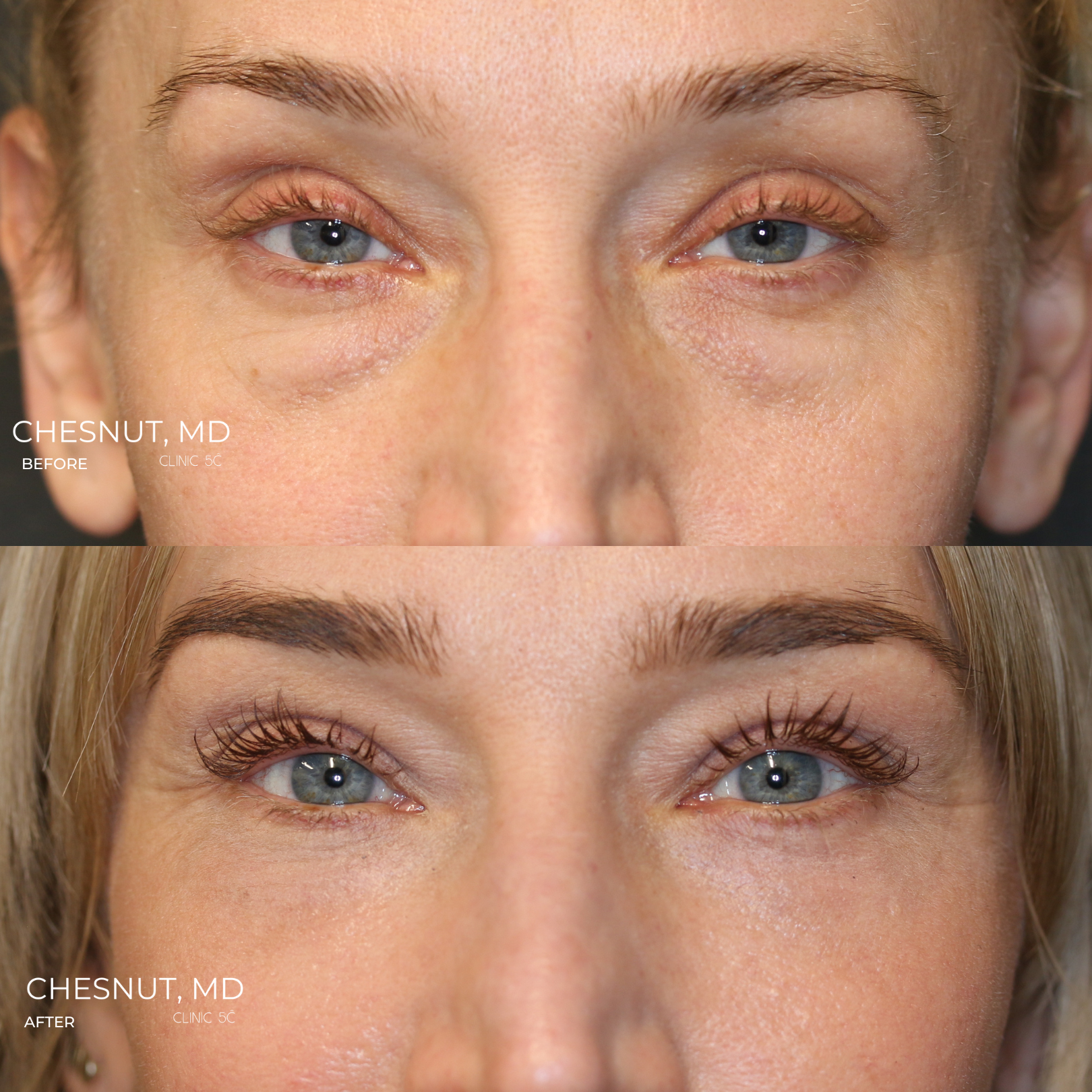
A 42-year-old patient presented with concerns about prominent lower eyelid bags that had been present since her youth. Although energetic and optimistic, she felt her appearance consistently conveyed fatigue she did not experience. The concern was not new or reactive. It had been stable and long-standing.
Her primary goal was not to look different, but to preserve her natural eye shape while addressing the fullness beneath her lids. During consultation, evaluation revealed both genetic lower eyelid fat prominence and a mild upper eyelid muscle weakness contributing to heaviness.
After thorough discussion of risks, limitations, and expected improvements, a surgical plan was developed focused on subtle structural refinement rather than dramatic change. The objective was alignment, not transformation.
This type of patient, medically healthy, emotionally clear, and seeking proportional refinement, often represents an example of appropriate readiness for facial surgery.
Signs You May Not Be Ready for Facial Surgery
What are the signs you may not be ready for facial plastic surgery? There are many factors that may determine readiness, and it's important to note that if you're not ready now, that doesn't mean you can't be ready at a later date. Here are some signs it might be wise to wait:
1. You are hoping surgery will solve a non-physical problem
Surgery can address structural changes in the face. It cannot repair relationships, change career trajectories, or correct internal self-esteem struggles unrelated to anatomy.
When expectations extend beyond physical refinement, surgery may not be the appropriate solution.
2. You feel rushed or pressured
Cosmetic surgery is elective. Decisions made under urgency or external pressure rarely lead to optimal satisfaction.
Thoughtful consultation and time for reflection are essential parts of responsible surgical care.
3. You are focused on a single image or trend
Occasionally patients seek surgery after seeing a photograph or comparing themselves to digitally altered images.
Sustainable decisions are based on consistent personal perception, not temporary visual triggers.
4. You expect surgery to dramatically change your life
Facial surgery can create meaningful aesthetic improvement. It does not fundamentally alter identity or guarantee emotional transformation.
Patients who understand that surgery is one component of overall well-being tend to approach it with appropriate perspective.
Timing: Early Intervention vs Later Intervention
One of the most common questions patients ask is whether it is too early or too late for a facelift.
Dr. Chesnut approaches these scenarios differently depending on age and structural needs.
Facial plastic surgery In younger patients
In patients in their 30s and early 40s, early facial aging often involves subtle descent of deeper fat pads rather than excess skin. Traditional facelift techniques that rely on large access incisions and skin elevation may not be necessary.
In select cases, Dr. Chesnut utilizes minimal-access deep plane techniques designed to address early structural changes while preserving natural tissue planes. These approaches avoid the more extensive access patterns used in traditional facelifts and do not typically involve skin removal.
The goal in this age group is structural support and long-term preservation, not aggressive tightening.
Facial plastic surgery in older patients
In patients in their 60s, 70s, or beyond, skin laxity and deeper structural descent may be more advanced. Traditional facelift techniques that include skin re-draping and structural repositioning may be appropriate.
Dr. Chesnut emphasizes balance in this age group:
• Is the patient medically healthy for surgery?
• Are expectations aligned with what is achievable at this stage of aging?
• Does surgery restore harmony between internal energy and external appearance?
He has performed facelift procedures on patients well into their 80s when health, mindset, and goals align. Age alone does not disqualify someone from consideration.
How Experienced Surgeons Evaluate Readiness
Responsible facial surgeons evaluate more than anatomy. They assess physical health and surgical safety, structural aging patterns, psychological readiness, expectation clarity, and long-term aesthetic planning.
Declining or delaying surgery is, in fact, sometimes the most appropriate recommendation.
Dr. Chesnut’s surgical philosophy centers on conservative, structurally sound intervention that supports natural aging rather than chasing trends. His approach prioritizes tissue preservation, deep-plane structural correction when indicated, and long-term harmony over short-term change.
The Right Time Is Personal
There is no universal “window” for facial surgery. Some patients benefit from early structural intervention. Others wait until later decades when aging changes feel more pronounced.
Readiness is defined by health, clarity, and realistic expectations, not by a specific age.
For patients considering facial surgery for the first time, a thoughtful consultation with an experienced facial surgeon can help determine whether the timing is appropriate or whether waiting is the wiser choice.
.avif)