

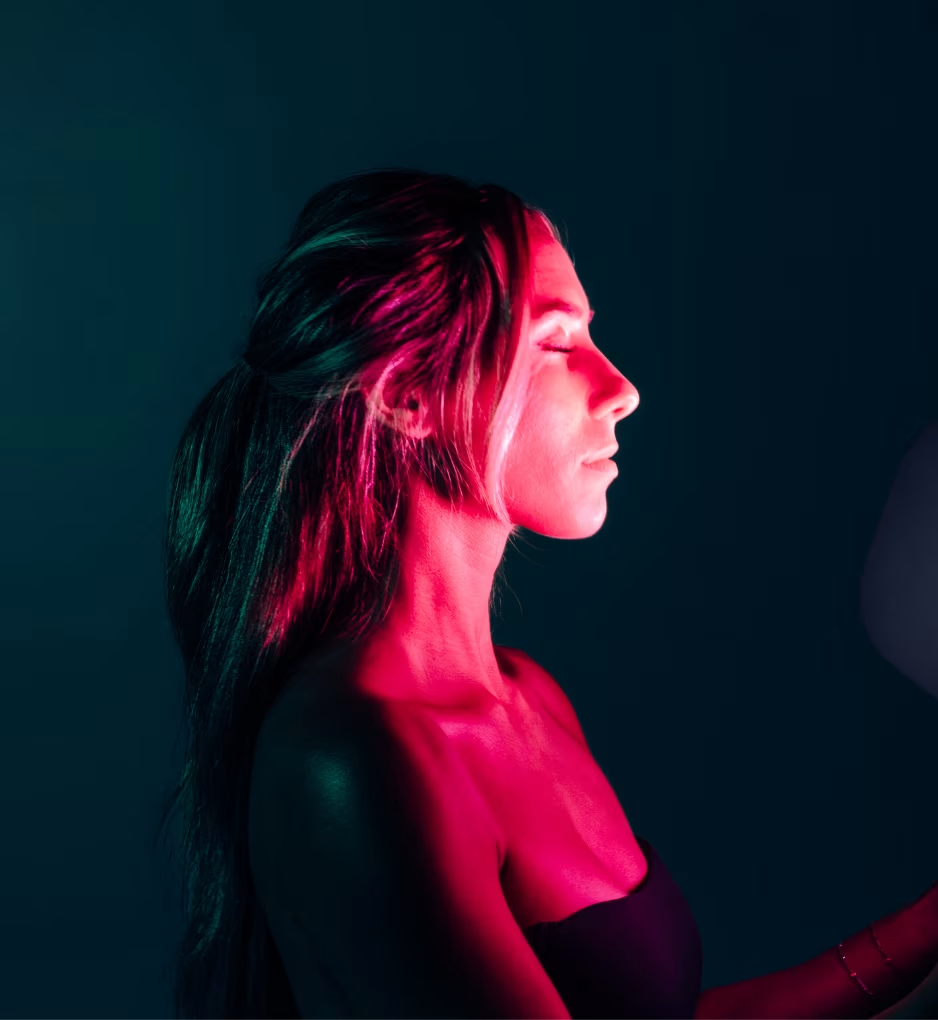
What Is Red Light Therapy? A Surgeon's Complete Guide to Photobiomodulation
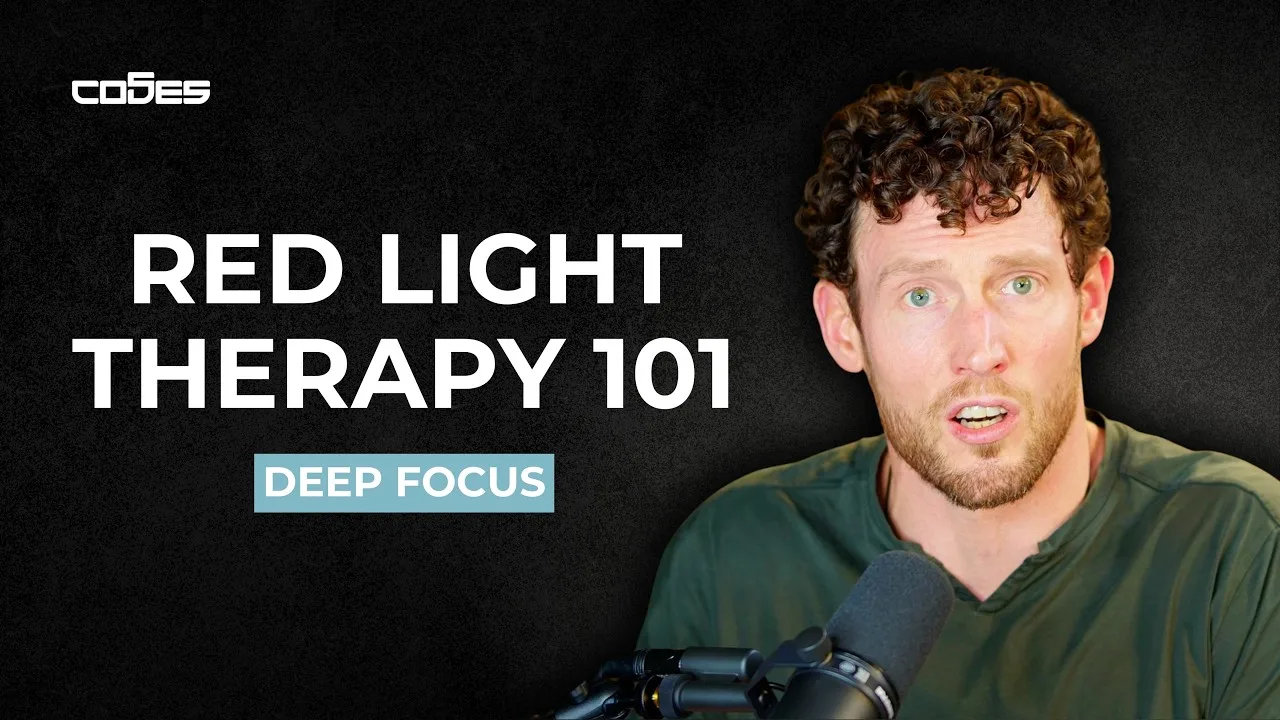
By Dr. Cameron Chesnut | Five Codes Podcast
Red Light Therapy is one of the most searched wellness topics of the mid-2020s. But most of what circulates online about it sits somewhere between incomplete and misleading.
I have been using red light in my surgical practice and personal performance protocol for my entire career. Before you buy a device or dismiss it as a trend, here is what you actually need to know.
What Is Red Light Therapy?
Red light therapy, also called photobiomodulation (PBM) or low-level light therapy (LLLT), is the use of specific wavelengths of light to interact with biological tissue and produce measurable changes in cellular function. It is not a laser, it is not heat therapy, and it is not ultraviolet light. It is a targeted application of longer-wavelength, low-energy light to cells that have specific biological responses to those wavelengths.
The wavelengths that matter are two: visible red light in the 630 to 660 nanometer range, and near infrared light in the 810 to 860 nanometer range. These are the ranges with the most robust clinical evidence and the clearest known mechanisms of action.
A Brief History: Why Was This Science Was Suppressed?
Red light therapy has a strange and important backstory. In the early 2000s, when serious research into photobiomodulation was beginning to produce compelling results, a prominent thought leader in laser medicine publicly called the science "bogus" at a major medical conference. The influence of that single statement suppressed publication of red light research for years. Studies that had been conducted were blocked from publication. The science continued in the background, but the information was not getting out.
This changed around 2008 to 2009, when those studies began to be published. What emerged was not fringe science. The initial publications focused on skin and hair, and the evidence that accumulated was eventually graded as Grade 1A, the highest level of medical evidence available. The same tier that supports major pharmaceutical interventions.
Understanding this history matters because it explains why red light therapy is simultaneously well-established in the research literature and still widely misunderstood in popular coverage. It was not proven wrong. It was quieted. The data, when it finally surfaced, was strongly positive.
How Red Light Therapy Works: The Core Mechanism
The primary mechanism involves the mitochondria, the energy-producing structures inside every cell. Within the mitochondria, energy is produced through a process called the electron transport chain. One complex in that chain, Complex IV, contains an enzyme called cytochrome C oxidase.
Under conditions of cellular stress, a molecule called nitric oxide binds to cytochrome C oxidase and slows down energy production. Red light at the right wavelengths interacts with cytochrome C oxidase and releases that nitric oxide. The result: the electron transport chain runs more efficiently, ATP (cellular energy) production increases, and the freed nitric oxide promotes vasodilation and improved blood flow to the treated area.
The practical outcome of this at a cellular level: cells have more energy available for demanding processes. Skin cells produce more collagen, elastin, and hyaluronic acid. Wounds heal faster. Neural tissue functions more efficiently. The scope of benefit follows directly from the fact that every cell in the body contains mitochondria.
There is also a second, newer mechanism involving the structured water surrounding mitochondria and how red light enhances communication between mitochondrial networks throughout the body. This explains why red light applied to one area can produce measurable metabolic benefits throughout the entire body, a phenomenon documented in peer-reviewed research.
What Red Light Therapy Is Clinically Proven to Do
The applications with the strongest evidence are:
Skin rejuvenation and anti-aging. Grade 1A evidence supports red light's ability to stimulate fibroblasts to produce collagen, elastin, and hyaluronic acid.
Hair growth. Grade 1A evidence supports red light's ability to stimulate hair follicles and improve growth in patients with thinning hair.
Eye health. The retina has the highest mitochondrial density of any tissue in the body. Near infrared light measurably improves retinal function and has demonstrated benefit in age-related macular degeneration.
Brain health and cognitive performance. Near infrared light penetrates through the skull to neural tissue. Clinical evidence supports benefit in TBI recovery, stroke recovery, mood, and cognitive performance.
Wound healing and surgical recovery. Red light applied to incisions and wounds measurably improves healing quality and speed.
Metabolic and systemic health. Red light applied to the body produces whole-system metabolic benefits including improved insulin sensitivity.
Why Your Light Environment Matters More Than Any Device
Red light therapy does not exist in a vacuum. It is a deliberate intervention designed to compensate for something that has gone wrong in our modern light environment.
Our original light sources were sunlight and fire. Both emit broad spectra heavily weighted toward longer wavelengths of red and near infrared. Modern LED lighting is almost entirely blue-spectrum, with minimal red or near infrared content. We are chronically deficient in the wavelengths our biology was calibrated for, and that deficiency has measurable physiological consequences.
Red light therapy devices are one part of addressing this. The broader context of your light environment, including when you get natural sunlight, what kind of lighting you use indoors, and how you manage blue light exposure, is the other part.
How to Use Red Light Therapy
The core principles for getting started:
Use it in the morning, before noon, when the body is most sensitive to light wavelength signals. Position yourself at the manufacturer-specified distance, follow their recommended duration, and use it consistently. Four to six weeks of daily use establishes the benefit; three to four times per week maintains it.
For the specific devices I personally use and recommend, see the my product recommendations page.
Frequently Asked Questions
Is red light therapy the same as infrared therapy?
No, though they overlap. Red light (630 to 660 nm) is in the visible spectrum and primarily works at the skin and superficial tissue level. Near infrared light (810 to 860 nm) is just outside the visible spectrum and penetrates significantly deeper, reaching muscle, bone, and even the brain. High-quality therapeutic devices typically include both wavelengths because they serve complementary purposes. Infrared saunas use far infrared wavelengths (above 1,000 nm), which are different again and work primarily through heat rather than the mitochondrial mechanisms described above.
Is red light therapy FDA approved?
Some specific applications have received FDA clearance, including red light devices for hair regrowth and certain wound healing applications. FDA clearance for a device focuses primarily on safety. The evidence for benefits in skin rejuvenation, brain health, and metabolic function exists in the peer-reviewed literature but may not all carry formal FDA approval designations. Clearance and approval are also different things in FDA terminology: clearance means the device is substantially equivalent to a legally marketed device, while approval requires independent clinical trials demonstrating efficacy.
How long does it take for red light therapy to work?
For skin applications, most people notice improvement within four to six weeks of consistent use. The structural changes in collagen and elastin that drive those improvements continue for months after treatment ends. For hair growth, studies typically measure outcomes at 16 to 26 weeks. For neurological and metabolic benefits, some effects (like improved color vision after retinal exposure) are measurable within days; others accumulate over weeks of consistent use.
Is red light therapy safe?
Red light therapy has an excellent safety profile. It is non-ionizing, does not damage DNA, generates minimal heat at standard doses, and has been applied safely to populations ranging from newborn infants with brain injuries to elderly patients with macular degeneration. The primary safety consideration is dose: very high irradiance for extended periods can inhibit rather than stimulate cellular function. Following manufacturer protocols for distance and duration avoids this. Standard consumer devices used as directed present essentially no risk.
Can you do red light therapy every day?
Yes. Daily use is typically recommended for the first four to six weeks to establish the therapeutic effect. After that, three to four times per week is generally sufficient for maintenance. Unlike some interventions that lose effectiveness with daily use, red light therapy does not produce tolerance. The caveat is excessive dose within a single session: longer is not always better, and manufacturer-specified session lengths exist for a reason.
Does red light therapy work through clothing?
No. Red light does not penetrate through fabric effectively enough to produce therapeutic benefit. Direct skin contact or close proximity without a fabric barrier is necessary for the light to reach the tissue and interact with the mitochondria. For skin applications, the light should make direct contact with the area being treated.
Listen to the Full Episode
This post is the hub for our complete red light therapy series, based on the Five Codes Podcast episode covering red light mechanisms, clinical applications, device testing, and the story of how photobiomodulation was suppressed and rehabilitated in the medical literature.
Listen on Spotify
Listen on Apple Podcasts
Watch on YouTube
Dr. Cameron Chesnut is a facial plastic surgeon and founder of 5C. He holds a clinical teaching affiliation with the University of Washington School of Medicine. The views expressed here are his own and are not affiliated with or representative of that affiliation. This content is for general educational purposes only and is not individual medical advice.
.avif)
Ready to begin your wellness journey?
Fax: (844) 961-3417