


Fat Transfer vs. Filler: A Facial Plastic Surgeon Explains the Real Difference
By Dr. Cameron Chesnut | Five Codes Podcast | Deep Focus
Fat transfer is one of my favorite things to talk about in facial plastic surgery, and one of the most misunderstood. The most common misunderstanding is treating it as a natural version of filler. It isn't. They operate on completely different biological principles, they produce different results, and comparing them as though they're doing the same job is like comparing a joint replacement to a cortisone shot. Both go in the joint. That's roughly where the similarity ends.
Here is the full picture.
What Facial Fat Transfer Actually Is
Facial fat transfer, also called fat grafting, is a graft. In medicine, a graft is tissue taken from one location, disconnected from its original blood supply, and moved somewhere else. In facial fat transfer specifically, fat is harvested from elsewhere on your body, most commonly the area around the navel, the flanks, or the medial thighs, and placed into the aging fat pads of your face.
This is a like-for-like restoration. The fat pads of your face are living biological structures that change with age not just in volume, but in quality, position, orientation, and the strength of the tissue within them. When I harvest fat from a metabolically rich area of your body and place it into a depleted facial fat pad, I am not just filling a space. I am reintroducing a living system into a living system.
Filler is something else entirely.
What Filler Actually Is
Think of filler as an implant. These are synthetic or engineered gels (hyaluronic acid being the most common) or biostimulatory materials that are not autologous, meaning they do not come from you. They are placed into your tissue from the outside.
Filler is a passive volumizer. It takes up space. It can change the apparent volume of a structure. It does that reasonably well in the short term, and when placed precisely and conservatively, it can have a role. But filler does not communicate with your biology. It does not stimulate collagen or elastin. It does not build new blood vessels. It does not improve the quality of the tissue around it.
We are also learning more about the ways filler can be actively harmful over time. It has a propensity to migrate through tissue planes in ways that are not fully controllable. It can disrupt the lymphatic drainage of the face, which has real consequences for how facial soft tissue looks and functions. And because it persists in tissue far longer than most patients are told, repeated sessions compound these effects rather than simply maintaining them.
The biggest difference between fat and filler is not duration or source. It is this: fat has regenerative potential. Filler does not.
Fat Transfer vs. Filler: A Direct Comparison
Why Fat Is a Biological System, Not Just Volume
This is the part that changes how most people think about fat transfer once they understand it.
Your face is not a canvas to paint. It is a biological system that communicates a great deal about you. The way your facial fat pads move when your muscles contract, the light they reflect at different depths, the texture and tone of the skin above them: all of this is rooted in the biological health of the underlying tissue. When you view the face as a canvas and add filler to it, you are layering volume onto a surface. When you use fat transfer, you are improving the system itself.
Fat is one of the richest sources of mesenchymal stem cells in the body. The fat I harvest contains what we call the three pillars of cellular regeneration:
Stromal cells, which create new blood vessels. This process, called angiogenesis, is critical both for the survival of the fat graft itself and for improving the vascular environment of the surrounding tissue.
The extracellular matrix, which provides structural scaffolding and improves the integrity of the fat pad from the inside out.
The secretome, which is the growth factor output of the fat. This is how the fat communicates with everything around it. Cells neighboring the fat graft begin producing more collagen and elastin. The inflammatory environment of a healing surgical site is modulated. Even the skin above a fat graft improves, and continues improving for years after the procedure, as that paracrine communication keeps working.
This is why, even years after fat transfer, patients continue to see qualitative improvements in their skin and soft tissue. The fat is not just sitting there. It is actively participating in the biology of your face.
The Breast Analogy
To understand why just adding volume to an aging fat pad is often not the right answer, consider the breast. A breast doesn't simply get smaller as it ages. It changes size, shape, orientation, and vertical position simultaneously. The fatty tissue within it loses internal structural integrity. Adding an implant to a breast that has aged this way does not address any of those qualitative changes. It only adds volume.
The facial fat pads age in a remarkably similar way. They descend. They lose internal strength. They change shape and orientation in relation to the muscles that surround them. Simply adding volume to a fat pad that has changed in all of these dimensions would be analogous to adding an implant to an aging breast: it might help one dimension of the problem while leaving the others unaddressed.
Fat transfer, especially when used alongside surgical repositioning, addresses all of it: the volume, the structural integrity, the regenerative quality, and the dynamic behavior of the fat pad as the surrounding muscles move.
When to Use Fat Transfer (Including Earlier Than You Might Think)
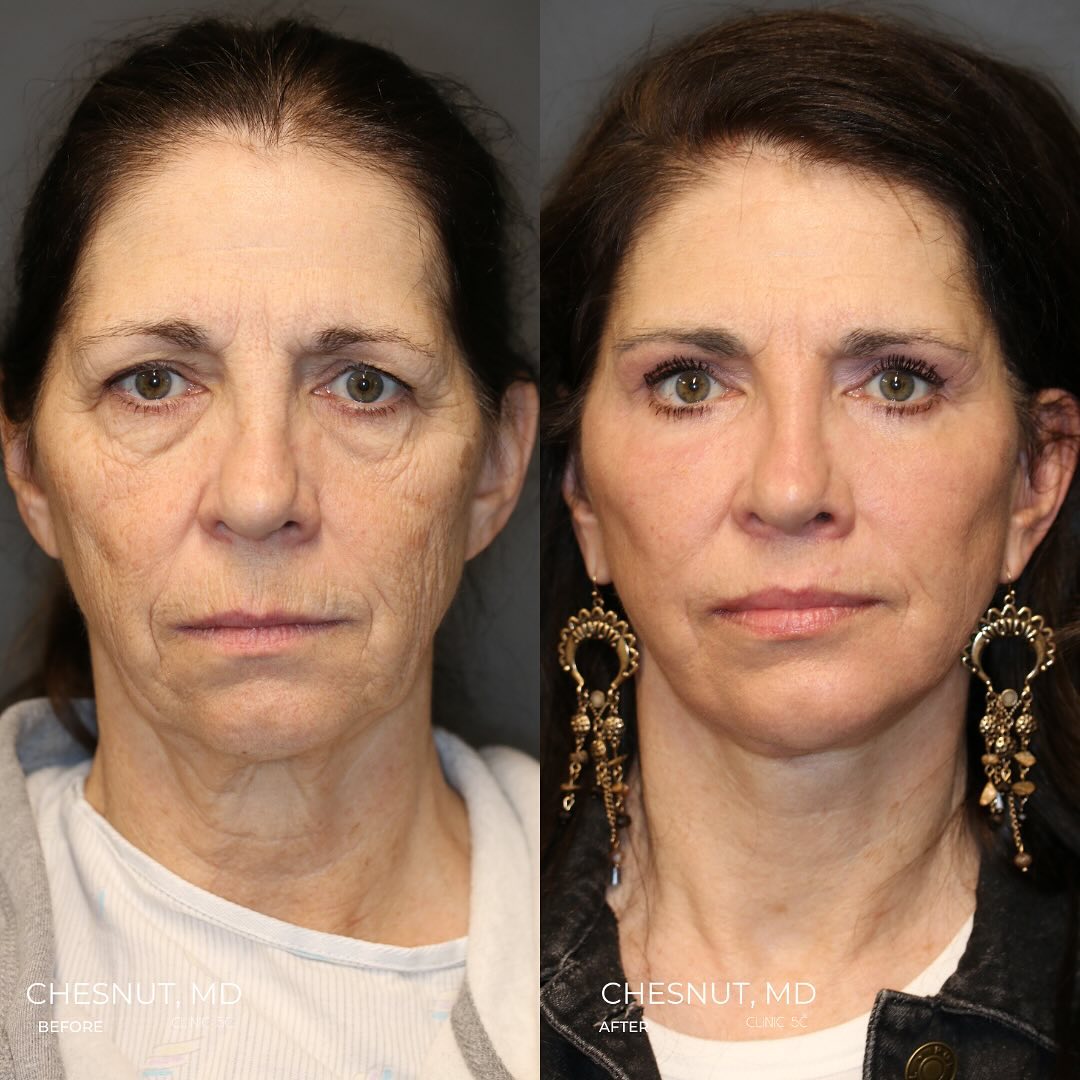
I am most often using fat transfer as an integral part of surgical procedures. If I had to describe my entire practice in one sentence, it would be this: I take fat pads that have moved to the wrong location and put them back where they came from. Surgery repositions the fat pad. Fat transfer ensures that repositioned fat pad has the volume, structural integrity, and regenerative quality to stay there, behave correctly, and improve over time.
The double benefit of using fat transfer alongside surgery is significant. The fat is addressing the aging of the fat pad itself. And simultaneously, the regenerative components of the fat are helping the surgical recovery: modulating inflammation, accelerating new blood vessel formation, and improving the quality of the tissue healing around the incisions.
But fat transfer can also be used without surgery, and this is where an important idea comes in that many patients haven't considered.
Fat transfer earlier in the aging process is worth thinking about.
We have a tendency in aesthetics to wait until the tissue has significantly degraded before intervening. In orthopedic medicine, the thinking has shifted in the opposite direction: early intervention with stem cell-rich treatments preserves joint tissue before it has deteriorated, and the outcomes are better for it.
The same logic applies to facial fat pads. Using fat transfer while the fat pads are in the early stages of aging, rather than waiting until they are significantly depleted, can genuinely blunt the aging curve. You are not just restoring lost volume. You are improving the biological quality of the fat pad and changing the trajectory of how that tissue will age going forward.
This is meaningfully different from what filler does, even when used early.
When I use fat transfer without surgery, I typically pair it with a customized laser protocol: resurfacing the skin above the treated fat pads simultaneously, and placing the more regenerative, nano-scale fractions of the fat directly into the skin itself to amplify the collagen and elastin response there.
Does the Fat Actually Survive?
Not all of the transplanted fat survives. That is true. But evaluating fat transfer purely through the lens of volume survival is the narrowest possible way to think about it, because the regenerative effects of the fat occur even in portions that are ultimately resorbed.
The take rate of fat is influenced by how it is harvested, how it is processed, how it is placed, and the vascularity of the recipient area. The face has an exceptionally rich blood supply, which is one of the reasons facial fat transfer is considerably more reliable than fat transfer to areas like the breasts or buttocks.
For context: a patient I operated on recently had previously received 500cc of fat per breast in a body fat transfer procedure. For her complete facial re-volumization, I used approximately 50cc total. Lower volume, richer blood supply, far more predictable take rate, and far more impact per cc placed.
My process for fat harvest and preparation is significantly more involved than simply extracting fat and re-injecting it. I harvest specifically from the regions of highest stem cell density: the periumbilical area, the flanks, and the medial thighs. I prepare the fat in a way that preserves and concentrates those stem cells. And I place it in very precise, layered micro-deposits through each fat pad, which maximizes contact with the vascular supply and gives the graft the best chance of establishing itself.
The quality of your stem cells is something you can influence.
Metabolic health matters. Patients who come in with excellent metabolic health, controlled blood sugar, quality sleep, and good body composition consistently have higher-quality stem cells. That, combined with how the fat is harvested and placed, determines how well the graft performs.
Does Fat Move After It's Placed?
No. This is a question that comes from comparing fat to filler, and the comparison doesn't hold.
Filler moves through tissue planes because it is a gel sitting passively in tissue, subject to the mechanical forces of muscle contraction and gravity. I see migrated filler in the operating room regularly, including in locations far from where it was originally placed. This is well-documented in the literature and something I discuss in more detail in the Does Filler Actually Migrate post.
Fat cannot migrate in the same way because of what happens after it is placed. In the first days following a fat graft, the transplanted tissue is working hard to establish a new blood supply. The stromal cells within the fat initiate angiogenesis: new blood vessels grow into the graft. Once that process is complete, the fat is integrated into the tissue. It is fixed. It has a blood supply. It is a living part of your face's biological system.
From that point forward, the fat behaves like the facial fat that surrounds it. It responds to weight changes, hormonal shifts, and aging just as your native facial fat does. It has become yours.
Where Fat Transfer Can Be Placed on the Face
I use fat in a pan-facial way. Rather than targeting one area at a time, I approach the face fat pad by fat pad, going through each one systematically: the deep fat pads, the superficial fat pads, the junctions between them. For each one I am assessing volume, position, structural integrity, and how it is interacting with the pads adjacent to it.
This includes the forehead, temples, upper and lower eyelid regions, cheeks, around the mouth, the jawline, and the perioral area. The type of fat I place varies by location and by what each specific fat pad needs. Structural fat for areas that need volumetric support. Microfat for more nuanced anatomical zones. Nanofat and pure regenerative fractions for the skin itself, particularly in areas with photo damage, fine lines, or textural change.
The lips are a special case worth addressing directly. There are not large fat pads inside the lips. The lip aging that most people are reacting to when they seek lip enhancement is much more about lengthening and inversion of the lip than it is about fat pad deflation. Placing significant fat volume into a lip that does not have a large native fat pad to receive it is not a like-for-like restoration. It can create an unnatural yellowish hue to the lip tissue (fat affects how light reflects from the surface, and in the lip's normally pink vermillion, excess fat disrupts that reflection).
In cases where lip volume loss is genuinely part of the picture, I will use very small amounts of fat with extreme precision. But more often, what patients perceive as lip volume loss is primarily a structural change best addressed with a deep plane lip lift, with nanofat placed into the surrounding skin to improve texture and brightness simultaneously.
Fat Transfer and Stem Cell Banking
Because I am already harvesting fat for facial procedures, this creates a natural opportunity that I take advantage of regularly. The stromal vascular fraction of the fat, the most stem cell-dense portion, can be separated and banked for future use while the rest is used for the current procedure.
I work closely with Dr. Christopher Meadows, our regenerative medicine specialist, on this. The stem cells we bank from a facial fat transfer procedure can be used later for additional facial rejuvenation, for hair restoration, or for orthopedic applications through Dr. Meadows' practice. And for patients who have previously banked stem cells, I can use them in a process called cell-assisted lipotransfer, mixing banked stem cells with freshly harvested fat to improve the regenerative quality of the graft.
For a deeper look at how mesenchymal stem cells work and what banking involves, see our Mesenchymal Stem Cell Therapy post.
Frequently Asked Questions
Is fat transfer better than filler for the face?
They serve different purposes, and for most meaningful facial rejuvenation goals, fat transfer offers significantly more. Filler adds passive volume and degrades over time without improving the biological quality of the tissue around it. Fat transfer adds volume, improves the structural integrity of the fat pad, stimulates collagen and elastin production in the surrounding skin, supports new blood vessel formation, and becomes a permanent, living part of your facial tissue. The exception is targeted, conservative filler for very specific short-term use cases in patients who are good candidates for it. For structural, long-lasting facial improvement, fat transfer is not in the same category as filler.
How long does facial fat transfer last?
The portion of fat that successfully engrafts is permanent. Once the fat establishes a blood supply and integrates into the tissue, it becomes a living part of your face. It does not degrade or disappear the way filler does. It will respond to aging, weight changes, and hormonal shifts just as your native facial fat does, but it does not have a built-in expiration date. Additionally, the regenerative effects of the fat continue for years after the procedure, producing ongoing qualitative improvements in the surrounding skin and soft tissue.
Does facial fat transfer hurt? What is the recovery like?
Fat transfer involves two sites: the donor area where fat is harvested, and the recipient areas of the face. Both have some swelling and bruising in the first one to two weeks. The face tends to look overfilled immediately after, as some of the placed fat will be resorbed in the weeks that follow. Final results become more visible as swelling resolves, generally within four to six weeks, with continued qualitative improvements in the tissue for months to years afterward. Recovery is supported at 5C with hyperbaric oxygen therapy, which meaningfully improves fat take rates by enhancing oxygen delivery to the new graft, and red light therapy for its anti-inflammatory and tissue-regenerating effects.
Can I get facial fat transfer if I am very thin or fit?
Yes, almost universally. The volumes needed for facial fat transfer are very small (in the range of 30 to 50cc for a full facial procedure) compared to body fat transfer procedures. Even patients with very low body fat percentages have sufficient volume in the periumbilical area, flanks, or medial thighs. In many of my very lean, metabolically healthy patients, the quality of the fat I harvest is exceptionally high, which means I need less of it to achieve excellent results.
Will fat placed in my face look lumpy or unnatural?
Not when placed correctly. The technique for facial fat transfer involves very fine, layered micro-deposits placed precisely through each fat pad at multiple depths. This creates smooth, natural integration with the surrounding tissue rather than a bolus of fat in one location. The fat conforms to the natural architecture of the fat pad and, as it establishes its blood supply, becomes indistinguishable from the native tissue around it.
Can filler be replaced with fat transfer if I have had filler previously?
This depends significantly on how much filler has been placed and where. In cases of significant prior filler, I will often perform ultrasound-guided filler dissolution before or during a fat transfer procedure to clear the tissue and allow the fat to be placed into a more natural, uncompromised anatomical environment. Fat and residual filler do not coexist well in the same tissue plane, and attempting to graft fat into heavily filled tissue limits the quality and predictability of the outcome.
Is fat transfer the same as a stem cell facelift?
The term "stem cell facelift" is used loosely in marketing and does not correspond to a specific standardized procedure. What I do is not a stem cell facelift in a marketing sense. It is surgical facial rejuvenation with integrated fat transfer, using harvested fat that is specifically prepared to maximize its stem cell content and regenerative potential. The stem cell-rich properties of the fat are not a marketing claim. They are a well-documented biological reality that drives the regenerative benefits I've described throughout this post.
Related reading:
- Stem Cell-Rich Fat Transfer at 5C
- Does Filler Actually Migrate? What a Surgeon Finds in the OR
- Mesenchymal Stem Cell Therapy: What the Science Actually Says
- Ultrasound-Guided Filler Dissolution
- LoveLift: Deep Plane Lip Lift
- Beyond the Deep Plane Facelift
- Post-Surgical Recovery at 5C
- Hyperbaric Oxygen Therapy
Dr. Cameron Chesnut is a facial plastic surgeon and founder of 5C. He holds a clinical teaching affiliation with the University of Washington School of Medicine. The views expressed here are his own and are not affiliated with or representative of that affiliation. This content is for general educational purposes only and is not individual medical advice.
.avif)
Ready to begin your wellness journey?
Fax: (844) 961-3417